IELTS Exam in Malaysia; May 2012, Academic
Listening test
Section 1. A woman was complaining about Internet ticketing services.
Section 2. A conversation between a student and a man seeking an accommodation. There were 3 different types of accommodation: a hostel, a terrace house and a flat including map of their locations.
Section 3. A conversation between two students, discussing problems with self-study approach.
Section 4. A speaker was talking about history of bicycles (year, types of bicycles, their advantages and disadvantages).
Reading test
Passage 1. The history of Viking ships.
Passage 2. About animal hibernation.
Passage 3. A study about people’s reaction to questions.
Questions for all passages were: short-answer questions (no more than X words), True/False/Not Given, matching headings to paragraphs.Writing test
Writing task 1 (a report)
We were given two pie charts about water distribution (fresh water versus all water) and one bar chart describing water usage by households, industry and agriculture in three different countries (Egypt, Saudi Arabia and Turkey).
Writing task 2 (an essay)
In most countries, prison is the most common solution for people committing a crime. However, providing better education can help prevent people from becoming criminals. To what extent do you agree or disagree?
Speaking test
Interview
- What is your name?
- Do you work or study?
- Why did you choose this career?
- Do you like flowers?
- When was the last time you gave flowers to somebody?
- Do you like flowers growing inside or outside of your house? Why?
- What do you like better: lunch or dinner?
- What food do you prefer for dinner?
- Is breakfast important to you? Why?
Cue Card
Describe an old person that you know well. Please say
- Who is he/she?
- When did you meet him/her?
- What is so interesting about him/her?
Discussion
- What are the advantages and disadvantages of being an older person?
- What is the difference between older people nowadays and in the past?
- Why don’t older people usually approve of younger people’s opinions?
Section 1. A woman was complaining about Internet ticketing services.
Section 2. A conversation between a student and a man seeking an accommodation. There were 3 different types of accommodation: a hostel, a terrace house and a flat including map of their locations.
Section 3. A conversation between two students, discussing problems with self-study approach.
Section 4. A speaker was talking about history of bicycles (year, types of bicycles, their advantages and disadvantages).
Reading test
Passage 1. The history of Viking ships.
Passage 2. About animal hibernation.
Passage 3. A study about people’s reaction to questions.
Questions for all passages were: short-answer questions (no more than X words), True/False/Not Given, matching headings to paragraphs.Writing test
Writing task 1 (a report)
We were given two pie charts about water distribution (fresh water versus all water) and one bar chart describing water usage by households, industry and agriculture in three different countries (Egypt, Saudi Arabia and Turkey).
Writing task 2 (an essay)
In most countries, prison is the most common solution for people committing a crime. However, providing better education can help prevent people from becoming criminals. To what extent do you agree or disagree?
Speaking test
Interview
- What is your name?
- Do you work or study?
- Why did you choose this career?
- Do you like flowers?
- When was the last time you gave flowers to somebody?
- Do you like flowers growing inside or outside of your house? Why?
- What do you like better: lunch or dinner?
- What food do you prefer for dinner?
- Is breakfast important to you? Why?
Cue Card
Describe an old person that you know well. Please say
- Who is he/she?
- When did you meet him/her?
- What is so interesting about him/her?
Discussion
- What are the advantages and disadvantages of being an older person?
- What is the difference between older people nowadays and in the past?
- Why don’t older people usually approve of younger people’s opinions?
IELTS TEAM Online: www.ieltsteam.weebly.com
دوستان عزیزی که مطالب این ویلاک را دنبال می کنند می توانند ما را در آدرس جدید زیر ببینند. بعد از مهاجرت موسسان این وبلاگ به استرالیاا این امکان فراهم شده تا سرویس های بهتری برای شما فراهم کنیم و مطالب مفیدتری داشته باشیم:
IELTS in Perth, Australia – August 2009 (Academic Module)
IELTS in Perth, Australia was described by O, who shared some topics and questions. She didn’t remember anything from Listening or Reading, but the questions from Writing and the Speaking are very helpful. Thank you O! (By the way, the questions in Speaking test were the same as in Istanbul, Turkey – so I’m told).
Writing test
Writing Task 1 (report)
We had a chart about oil consumption and production in China from 1984 up to 2008. It was easy.
Writing Task 2 (essay)
There are many new technologies for communication. Do you think they
are helping people to stay in touch or not? Provide relevant examples
and state your opinion.
Speaking test
Interview- What is your name?
- How should I call you?
- Are you driving?
- Is it important to drive safely? Why?
- What kind of music do people listen in your country?
- What is popular leisure activity in your country?
- Do you like vegetables and fruit?
- Is it important for children to eat them?
- What age is good to start learning how to drive?
- Did you get your license when you were at school?
Cue card
Talk about a leisure activity that you want to start:
- When are you starting it?
- Where is it going to take place?
- What is the use of this activity?
Discussion
- Should people get involved in leisure activities?
- Do you think it can be difficult to have leisure activities when you retired?
- Do people get bored leisure activities when they are retired?
هزینه های زندگی در استرالیا
لطفا
توجه داشته باشید که هزینه های زیر تنها و تنها جنبه یک اطلاع رسانی بسیار
کلی دارند. برنامه ریزی زندگی آینده خود در استرالیا را بر اساس این
هزینه ها و بسیاری از اطلاعات موجود در اینترنت پایه گذاری ننمایید. در
مورد دخل و خرج خود به عنوان یک مهاجر تازه وارد در استرالیا حتما و حتما
با ما مشورت نمایید. ما تمامی متقاضیان خود را پس از اینکه اجازه ورود به
استرالیا را کسب می نمایند تحت یکسری آموزشها و جلسات قرار می دهیم که یکی
از موضوعات مهم این جلسات در مورد این می باشد که هر فرد یا خانواده بسته
به شرایط فعلی که در ایران دارد و شرایطی که برای زندگی در استرالیا برای
خود در نظر گرفته است برای چه میزان هزینه زندگی در استرالیا باید خود را
آماده نماید.
بطور کلی هزینه زندگی در استرالیا در شهرهای مختلف متفاوت است. بعنوان مثال سیدنی دارای بالاترین هزینه های زندگی و آدلاید دارای کمترین می باشد. بطور کلی می توانیم هزینه های زندگی در استرالیا را بصورت زیر دسته بندی کنیم:
1- هزینه اجاره خانه اجاره خانه در استرالیا بصورت هفته ای پرداخت می شود. خانه ها در استرالیا شامل یونیت یا آپارتمان و ویلا / هاوس می باشد. اجاره خانه به عوامل مختلفی همچون موقعیت واحد در شهر٬ تعداد خواب و نوع واحد بستگی دارد. بطور کلی خانه ها یا بصورت استودیو (بدون اتاق خواب) هستند که اجاره پایین تری دارد و یا دارای یک یا بیشتر اتاق خواب می باشند. همچنین برخی از خانه های با تعداد اتاق خواب زیاد بصورت اشتراکی اجاره داده می شوند در اینصورت فرد می تواند از یک اتاق خواب به همراه بقیه امکانات آن خانه بصورت اشتراکی استفاده کند. این مدل اشتراکی بیشتر برای دانشجویان که نمی خواهند هزینه زیادی داشته باشند. بطور متوسط شما می توانید خانه مورد نظر خود را با 190 دلار تا 340 دلار در هفته اجاره نمایید. همانطور که گفته شد رقم اجاره بستگی به شرایط و موقعیت خانه دارد.
بطور کلی هزینه زندگی در استرالیا در شهرهای مختلف متفاوت است. بعنوان مثال سیدنی دارای بالاترین هزینه های زندگی و آدلاید دارای کمترین می باشد. بطور کلی می توانیم هزینه های زندگی در استرالیا را بصورت زیر دسته بندی کنیم:
1- هزینه اجاره خانه اجاره خانه در استرالیا بصورت هفته ای پرداخت می شود. خانه ها در استرالیا شامل یونیت یا آپارتمان و ویلا / هاوس می باشد. اجاره خانه به عوامل مختلفی همچون موقعیت واحد در شهر٬ تعداد خواب و نوع واحد بستگی دارد. بطور کلی خانه ها یا بصورت استودیو (بدون اتاق خواب) هستند که اجاره پایین تری دارد و یا دارای یک یا بیشتر اتاق خواب می باشند. همچنین برخی از خانه های با تعداد اتاق خواب زیاد بصورت اشتراکی اجاره داده می شوند در اینصورت فرد می تواند از یک اتاق خواب به همراه بقیه امکانات آن خانه بصورت اشتراکی استفاده کند. این مدل اشتراکی بیشتر برای دانشجویان که نمی خواهند هزینه زیادی داشته باشند. بطور متوسط شما می توانید خانه مورد نظر خود را با 190 دلار تا 340 دلار در هفته اجاره نمایید. همانطور که گفته شد رقم اجاره بستگی به شرایط و موقعیت خانه دارد.
2- هزینه خوراک : بطور متوسط هزینه غذایی در یک هفته برای یک زوج بین 80 تا 120 دلار می باشد. در استرالیا فروشگاههای زنجیره ای بسیار است و شما می توانید از اجناس مورد نیاز خود را از آنجا تهیه کنید. برخی از این فروشگاههای عبارتست از Woolworth و Coles
در اینجا فهرستی از قیمتها به منظور آگاهی قرار داده ایم.
|
محصول |
قیمتAU$ |
محصول |
قیمتAU$ |
|
یك كیلو فیله ماهی |
12.00 |
یك كیلو برنج |
1.50 |
|
یك كیلو میگو |
28.00 |
یك كیلو لوبیا سبز |
4.90 |
|
گوشت همراه با دنبه |
12.00 |
یك كیلو لوبیا قهوه ای |
3.50 |
|
گوشت چرخ كرده |
7.50 |
یك كیلو هویج |
1.50 |
|
دو كیلو مرغ یخ زده |
7.50 |
یك كیلو پیاز |
1.50 |
|
یك كیلوسینه مرغ |
13.00 |
یك كیلو گوجه فرنگی |
3.00 |
|
12عدد تخم مرغ |
3.50 |
یك كیلو كاهو |
1.50 |
|
یك لیتر شیر |
1.40 |
یك كیلو پرتقال |
4.00 |
|
پنیر معروف |
7.00 |
یك كیلو موز |
8.00 |
|
كره 250 گرمی |
8.00 |
یك كیلو سیب |
2.50 |
|
یك كیلو ماست |
3.00 |
خمیر دندان |
3.50 |
|
یك بسته غلات |
6.00 |
آب معدنی |
3.00 |
3- هزینه وسیله نقلیه : در استرالیا وضعیت وسایل نقلیه عمومی خوب است و شما می توانید برای رفت و آمد از آن استفاده نمایید. وسایل نقلیه عمومی شامل اتوبوس ٬ قطار شهری و تاکسی می باشد. در صورتی که از وسایل نقلیه عمومی استفاده کنید بایستی بلیط تهیه کنید که اینکار توسط دستگاههای صدور بلیط در مکان ایستگاه های اتوبوس یا قطار انجام می شود. معمولا بلیط های صادر شده دارای مدت زمان اعتبار می باشد مثلا برای چند ساعت و شما می توانید در این بازه زمانی از همان بلیط استفاده نمایید. بطور متوسط هزینه بلیط اتوبوس و قطار شهری بین 1 دلار و بیست سنت تا 3 دلار متغیر است بسته به مسیری که می خواهید بروید. اما چنانچه می خواهید از ماشین شخصی خود استفاده نمایید بایستی توجه داشته باشید که مخارج ماشین شامل بنزین ٬ هزینه سرویس ماشین ٬ هزینه بیمه و هزینه رجیستر کردن می باشد که هر سال بایستی این هزینه را پرداخت نمایید. بطور متوسط یک ماشین برای شما بین 50 تا 80 دلار در هفته هزینه دارد.
4- هزینه آب / برق / گاز / تلفن: در استرالیا بایستی هزینه برق ٬ گاز و تلفن را پرداخت نمایید. البته هزینه آب بسیار پایین است. معمولا هزینه ها هر دو ماه یکبار بصورت قبض برای شما ارسال می گردد. برخی از خانه های دارای گاز نیستد و تمامی وسایل با برق کار می کند. بطور متوسط شما در ماه 60 تا 90 دلار هزینه برق دارید و به همین میزان نیز مصرف گاز. سیستم تلفن دارای هزینه اجاره ماهیانه 30 دلار است و علاوه بر آن شما بایستی برای هر اتصال تلفن مبلغ 20 سنت بپردازید.
البته اینها هزینه های کلی هستند و شما هزینه های دیگری مانند پوشاک ٬ بهداشت و درمان و تفریح و سرگرمی خواهید داشت.
Task 2 - Band Score 8 Sample
As computers are being used more and more in education, there will be soon no role for teachers in the classroom.
There have been immense advances in technology in most aspects of people?s lives, especially in the field of education. Nowadays, an increasing number of students rely on computers for research and to produce a perfect paper for school purposes. Others have decided to leave the original way of learning and to get knowledge through online schools. These changes in the learning process have brought a special concern regarding the possible decrease of importance of teachers in the classroom.
Some people believe the role of teachers started to fade because computers have been helping some students to progress in their studies quicker than when compared with an original classroom. For example, in the same classroom, students have different intellectual capacities, thus some would be tied to a slow advance in their studies because of others? incapacity of understanding. In this way, pupils could progress in their acquisition of knowledge at their own pace using computers instead of learning from teachers.
However, the presence of a teacher is essential for students because the human contact influences them in positive ways. Firstly, students realize that they are not dealing with a machine but with a human being who deserves attention and respect. They also learn the importance of studying in group and respect other students, which helps them to improve their social skills.
Moreover, teachers are required in the learning process because they acknowledge some student?s deficiencies and help them to solve their problems by repeating the same explanation, giving extra exercises or even suggesting a private tutor. Hence, students can have a bigger chance not to fail in a subject.
In conclusion, the role for teachers in the learning process is still very important and it will continue to be in the future because no machine can replace the human interaction and its consequences.
This is a great essay. Looks like Band 8 to me. No improvements are necessary, Keep up the good job!
IELTS in Ireland - July 2009 (Academic Module)
IELTS in Ireland was described very well by a caring student M, who sent me this update this morning. Here is what the exam was like:
Listening test
Section 1: A lady who had recently moved to the place was inquiring about a drama club with the chairman of the club.
Questions: Fill in the blanks, multiple choice, information matching.
Section 2: A conversation between 2 students about books, their
authors and contents of the books. The books were about insects and
wild animals.
Questions: fill in the blanks.
Sections 3 and 4 M didn’t remember.
Reading test
Passage 1: The text was about disabled children, their difficulties
in education, the steps taken by the government of New Zealand and what
else can be done.
Questions: Which paragraph has the following sentences.
Passage 2: The text was about “Tulip Mania”, how the Europeans were crazy about tulips, how tulips trading had its success and then declined.
Passage 3: The text was about believing in serendipity in scientific research and business amongst different scientists.
Writing test
Writing Task 1 (report)
Explain the difference between the two diagrams. The 2 diagrams showed the school buildings in 2003 & 2010.
Writing Task 2 (essay)
Express your views regarding sufficient respect towards older people.
What can be the reasons? How does it affect the society? Support your
answer with your personal experience.
Speaking test
Interview
- What is your full name?
- Where do you live at the moment? Describe that place.
- Do you eat fruit and vegetables?
- How important are the fruit and vegetables? Is it easy to get them?
- Why do you think new generation doesn’t like their old culture/outfits?
- Do you have any of your childhood toys?
- Do you think nowadays kids have more toys? Why?
Cue card
Talk about one of your childhood’s memorable events, you should say
- why do you remember it?
- when did it happen?
- what happened during the event?
IELTS in New Zealand - July 2009 (General Training)
IELTS in New Zealand - here is what they had very recently. Huge thanks to R for remembering and sharing, we all hope you get a great score.
Listening test
Section 1: A call to a travel agency, making a reservation.
Section 2: was related to art.
Section 3: two students are talking about a subject they study.
Section 4: about four shopping mall aisles organization, where do you put the products.
Questions: multiple choice.
Reading test
Passage 1: about Rottem Camp, California.
Questions: True/False/Not given.
Passage 2: about Learndirect (courses?).
Questions: Fill in the gaps.
Passage 3: About art galleries.
Questions: Matching headings to paragraphs.
Passage 4: About Otzi the Iceman.
Questions: True/False/Not given and matching headings to paragraphs.
Writing test
Writing Task 1 (letter)
You have been offered a job overseas that you applied for. Write a
letter to your friend who already knows about that job as well
- tell what kind of job is it
- explain why you applied for this job
- ask your friend about the country
Writing Task 2 (essay)
Some people are living in the high-rise apartments, which makes them
feel lonely and unhappy. What are the advantages and disadvantages of
living in apartments.
Give reasons and provide examples.
Speaking test
Interview
- Tell me about your city.
- Describe the room where you live.
Cue card
Speak about success that you experienced in your life recently, you should say
- when it happened
- what was it
- why you feel it was a success
Discussion
- Talk about success:
- How does it affect peoples lives?
- How can a person become successful?
- What do you have to do?
- How long does success last?
June 2009
IELTS Band Score: Listening 8.5, Reading 8.5, Writing 8.0, Speaking 8.0, Overall 8.5.

IELTS Academic Module: Harpreet Kaur from India .
IELTS Band Score: Listening 8.5, Reading 8.5, Writing 7.5, Speaking 8.5, Overall 8.5.

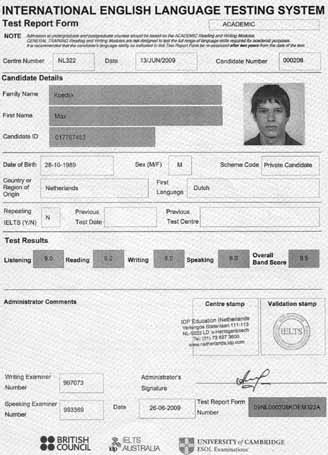
IELTS Academic Module: Max Koedijk from Netherlands.
IELTS Band Score: Listening 9.0, Reading 9.0, Writing 8.0, Speaking 8.0, Overall 8.5.
IELTS General Training Module: Amit Thakkar from India.
IELTS Band Score: Listening 8.5, Reading 7.5, Writing 7.5, Speaking 7.5, Overall 8.0.

IELTS General Training Module: Aik Kum Heng from Malaysia.
IELTS Band Score: Listening 7.5, Reading 8.5, Writing 7.0, Speaking 8.5, Overall 8.0.

IELTS General Training Module: Jessica D Souza from India.
IELTS Band Score: Listening 8.0, Reading 7.0, Writing 8.0, Speaking 8.0, Overall 8.0.

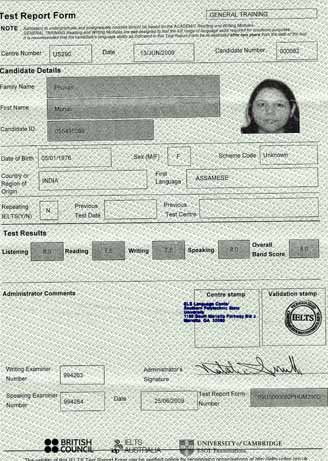
IELTS General Training Module: Monali Phukan from India.
IELTS Band Score: Listening 8.5, Reading 7.5, Writing 7.5, Speaking 8.0, Overall 8.0.
IELTS in Malaysia - July 2009 (Academic Module)
IELTS in Malaysia was described by I. as follows (and what an excellent memory she has!):
Listening test
Section 1: A female student wanted some advice on how to go about online shopping from her male friend.
Questions: Fill in the blanks and True/False/Not Given.
Section 2: A friendly neighborhood radio announcement about an upcoming town fair, and the activities and souvenirs on offer.
Questions: A Table was given, and the task was to fill in the blanks
some details: dates, types and frequency of activity, and types of
souvenirs available.
Section 3: A survey conducted on usage of beauty and skin products amongst 3 different age groups: 20, 25-35 and >40.
Questions: There was a little graph and multiple choice questions were
asked. There was also a short fill in the blanks section on the types
of techniques used in conducting the survey.
Reading test
Passage 1: Studies and findings on alternative processes which cause less pollution than traditional sources of energy like coal and LNG. This passage was very technical.
Questions: Match the organization or the professor with their experiments and survey reports. You may use letters A-H more than once. Multiple choice questions followed.
Passage 2: A study done on Leaf-cutter Ants, the world’s smallest gardeners. They spend their time cutting leaves to make compost for gardens in which they grow fungi that they eat. The passage was very scientific in nature, and the most confusing of the 3 passages with lots of unfamiliar terms.
Questions: Information matching - confirm which paragraph letter(A-H) stated what amongst a list of 6 scientific observations. There were also 3 multiple choice questions.
Passage 3: Telepathy and Parapsychologists who investigated the causes and existence of psychic abilities. It discussed mostly the Ganzfeld experiments conducted in the 1920s, where a ’sender’ would be given 4 random images and asked to choose one, and the ‘receiver’ in another room would use telepathy to positively identify what that chosen image is. The test data gathered would then be subjected to a ‘meta-analysis’ for interpretation.
Questions: Information matching - state which paragraph corresponds to the 5 given statements/findings, A-H. We were given a table for filling in the blanks. Data to be included was dates, name of scientist, testing method and results.
Writing test
Writing Task 1 (report)
Two tables were given. We were required to report on a survey conducted
on a library’s range of books (Table 1) and non-book facilities (DVDs
& CDs) (Table 2) across 5 age categories. The subjects’ criteria
were Very Good, Satisfactory and Poor.
Writing Task 2 (essay)
Governments have been responsible for environmental pollution. Should
companies and private individuals be made to pay the costs for
pollution? To what extent do you agree or disagree? State facts, your
opinions and/or personal experiences you may have regarding
environmental pollution.
Speaking test
- What is your full name?
- How should I call you?
- Tell me about the city you live in.
- Does your city have a swimming centre?
- Do you agree that swimming is good for you? Why?
- Do you like to attend parties?
- What kind of parties do you prefer, family parties or young people’s parties? Why?
- What is the legal age for drinking, driving and marriage in your country?
- Do you think that the legal age is suitable? Why?
- Do you agree that the legal age should be reduced to a lower age? Why?
Cue Card
Tell me about the best stage in your life. You should say:
- When that stage was.
- What you did.
- Who you did it with.
- Why it it was the best stage in your life.
Discussion
- Why do you think traditional ceremonies and national days are celebrated?
- Do you think they should be marked?
- Can we do without them? Why is it significant or insignificant to some?
- Why is it important to you?
Then I shook her hand, and said “Thank you so much for your time. I hope you have a great weekend!” Big smiles!
That was it! I think it wasn’t bad at all. Try to be as honest as possible and have a connection with the examiner when telling your little story, just like when you’re talking to your friends or family. It makes a lot of difference.
That’s all people! Enjoy trying out the questions and all the best in your IELTS!