Some IELTS Tips - Speaking


1. Give a full answer. Don't just give one word answers. Include more information. For example, when asked where you're from, instead of just saying the name of the place, speak in a sentence which states the name, the location, and how long you've been there. This shows the examiner you are confident speaking in English. But don't speak too long or the examiner will think you've misunderstood the question!

2. Speak clearly and don't worry about your accent. Everyone has an accent when they speak English. The important point is that you enunciate the best you can so the examiner can understand you. Rehearse in advance to overcome any obvious pronunciation problems. If you make a mistake, don't worry, just correct yourself and keep going.

3. Use descriptive words. Don't use boring words like good, bad, nice, or okay. Use exciting words that covey emotion. Practice using higher level words for every simple word you know – such as thrilled instead of happy, or depressed instead of sad.

4. Speak up. Sometimes, students mumble and speak very softly because they are nervous or unsure of their words. Use simple, correct language rather than complicated vocabulary and speak loudly enough that the examiner does not have to strain to hear you. This indicates self-confidence and command of the language.

5. Don't use slang. You have 11 minutes to display the best English you know in all the years that you have been learning English! Choose to be formal rather than informal.

6. Keep a steady pace. Don't speak too fast or too slow.

7. Don't try to memorize answers to sample subjects. The examiner has enough experience to recognize that you are not speaking naturally and spontaneously and will change the subject or give you a lower score. Use the sample subjects to give you practice speaking on a variety of topics, but not to memorize.

8. Explain names or words which are in another language. For instance, if you are asked to speak about a festival, which involves using words in your language, say the words clearly and give the meaning if any afterwards, so the examiner can follow your explanation.

9. Ask questions, if necessary, in Part 3 only. You cannot ask questions in Parts 1 and 2, but you can do so, if necessary in Part 3.

10. Practice speaking with a watch. Get an idea of how long two minutes is and approximately how much content you will have to cover.

11. Stay on topic. Don't change the subject or the examiner will think you have misunderstood and may give you a lower mark.

12. Have daily discussions with friends. Take turns asking each other questions about current events and develop your ability to speak about various topics, using varied sentence structure and vocabulary.

How to get a higher band for IELTS Speaking

Many students asked me how they can get a better score for Speaking. One of the things that matters in the Speaking test is your pronunciation. When you study with a teacher, improving your pronunciation is easier – he can correct you and you can listen to him and just copy the way he pronounces words. But what do you do if you’re all alone and study by yourself?

A number of things, actually!

First, you can use a free web-based text-to-speech application such as this one (click here to try). “Text-to-speech” means exactly that – you type a word and the program says it. Get a passage of text and start reading it out loud. Any word you are not sure how to pronounce, type in that website and click “Say it” to hear it. Repeat it again and again until you remember the right way to say it.

Second, you can record yourself speak – using a computer or a tape recorder, an mp3 player, a mobile phone – now there are many devices that allow voice recording. Then listen to your recorded voice and make note of what words are mispronounced. Start working on those using the talking website again and get them right.

Third, get a recording of news/radio/anything made by native English speakers. Play it and repeat after them, trying to copy the way they pronounce words.

A word of advice – there is no quick and easy fix for bad pronunciation. The chances are that you won’t get rid of your accent completely – but the accent doesn’t matter in IELTS as long as you pronounce the words correctly, so work hard on that – and you should be just fine!

IELTS exam in Brazil - April 2009 (Academic Module)

This update came from Brazil, where M just had her IELTS exam. She shares the questions and topics while they are still fresh in her memory:

Listening test

Section 1: A guy was trying to buy a Barbecue. The sales woman explained to him the models, advantages, disadvantages and prices.
Section 2: Specific characteristics of a Barbecue that the man had chosen and complements he should buy.
Section 3: Students gathering information about a project he needs to work on.
Section 4: The history of the development of bicycles.

Reading test

Passage 1: Text about “Pearls - a jewel from the sea”. There were 2 pages and 6 paragraphs, the questions were to match main idea of each paragraph to a statement, or to complete sentences with words given.

Passage 2: “The development of emotions in babies”. The questions were to match main ideas of some paragraphs to statements and about the research data.

Passage 3: “Foreign Language - How it is managed in the business environment”. It was the most difficult one in my opinion because it asked for to many details on the last part of Reading . We had to complete a long paragraph with words given, to identify the main idea of the text and to complete sentences with words from the original text.

Writing test

Writing Task 1 (report)
A table with 4 different types of housing in 3 residential areas, the information was provided in percentages.

Writing Task 2 (essay)
People say that watching television is bad for children. What do you think? Develop both arguments, positive and negative, and give your opinion.

Speaking test

Interview
The examiner asked me:
- My full name
- Whether I work or study.
- Which tools am I using to study?
- Where is the closest swimming pool to my house.
- Do people in my country like to swim? Why?

Cue card
A stage in my life I liked the most.
- When was it
- Where I was living
- Why it was important

Discussion
- Talk about marriage. What are special stages in my country. Why do I think they are important?
- If there was a particular stage or age at which people are considered adults in my country. What do I think about it.

IELTS exam in Taipei, Taiwan - April 2009 (Academic Module)a


IELTS exam in Taipei, Taiwan - April 2009 (Academic Module)


Thanks to C who took Academic IELTS exam in Taiwan we know this much about the topics and the questions:

Listening test

Note: this is no mistake, the Listening is the same as in Australia.

Section 1 - a girl was looking for a part-time job.
Section 2 - a student-tutor conversation.
Section 3 - it was about a museum (with multiple choice questions A,B,C)
Section 4 - about graduates and employees, can’t remember exactly, but wasn’t hard at all.

Reading test

Passage 1 – a water extraction system used on an island, Stavo, in the Mediterrean, the questions were of “true or false” kind.

Passage 2 – about medical science, very difficult, even though the title was easy ”Follow Your Nose”. I just know the word, hippocampus, a part of our brain, used for short term memory. The passage describes the nose function that associated with the brain, and quotes several experts’ researches.The questions were T/F/NG and multiple choice.

Passage 3 – about astronomy, also very difficult. It mentioned the orbits of gas, dust, and planets(Jupiter, Mars…etc.) I know the planets, but it didn’t help me. There were too many professional words. Ridiculous! The questions were T/F/N G and multiple choice.

Writing test

Writing task 1 (report)
We had a bar chart “Rates of Adult Literacy by Region”. There also was a comparison of males and females in these regions (Latin America, Arab states, Central Asia, etc.), average percentage of the world.

Writing task 2 (essay)
There are many products, but only some of them meet the people’s need. Even without advertising, they will sell well. What is your opinion?

Speaking test

Interview
- Please tell me your Chinese full name.
- What’s your occupation?

Cue card
- What’s your favorite part of your town?
- Where is it located?
- What do you do there?

Follow up questions
- Would you describe your home town?
- Which part do you think is most important?

ثبت نام در ايران

مطابق اطلاعات ثبت شده در سايت رسمي IELTS اين آزمون تنها توسط دو ارگان و در سه مركز به شرح زير در برگزار مي شود:

Iran
Holy City of Mashad
Mashad - London Centre of Education (International University of Chabahar)
Next Test Date: 25-Apr-2009
More Information

Iran
Tehran
Tehran - London Centre of Education (International University of Chabahar)
Next Test Date: 25-Apr-2009
More Information

Iran
Tehran
IELTS Australia Tehran - Test Centre
Next Test Date: 30-Apr-2009
More Information

براي اطلاع از چگونگي ثبت نام در اين مراكز به وب سايت آنها مراجعه نماييد.

IELTS exam in Sunshine Coast, Australia - April 2009 (General training)

And the reports from the latest IELTS exam started to roll in. Here is what guys at Sunshine coast had (thanks to E for letting us know):

Listening test

Section 1 - a girl was looking for a part-time job.
Section 2 - a student-tutor conversation.
Section 3 - it was about a museum (with multiple choice questions A,B,C)
Section 4 - about graduates and employees, can’t remember exactly, but wasn’t hard at all.

Reading test

Passage 1 - a tourist attraction, the questions were of “true or false” kind.
Passage 2 - Something about university, who do you need to contact, what should students do in a certain situation, that sort of questions.
Passage 3 - students’ opinions about their course and college, “who says what” sort of questions.
Passage 4 - about children speaking more languages.
Overall, reading wasn’t too hard.

Writing test

Writing task 1 (letter)
Your friend is asking for your advice, she goes to a university and can’t decide whether to study music or business management. Write a letter and in it
say how you felt when you got the letter,
what the good points are for both sides and
what your advice is.

Writing task 2 (essay)
Home cooking tends to be a disappearing skill in some countries. How is it in your country? Do you think all children should be taught about home cooking?

Speaking test

Interview
the questions were about holidays, riding bicycle, formal and informal clothing, uniforms.

Cue card
Describe a special occasion when you were wearing a dress, you should say:
- What was the occasion,
- what dress did you wear,
- when did you buy it,
- what other people said about it.

Some other cue card topics (from other students): the house you live in, a speech, a stage in your life when you were very happy.

Twenty tips for IELTS success

Twenty tips for IELTS success
Written by Rad Danesh   

1 In Listening, use the example at the beginning of the first section to familiarize yourself with the sound, the situation, and the speakers.

2 Keep listening until the recording stops, looking only at the questions that relate to the part being played.

3 There are often pauses in the recording between different sections. Use these to prepare for the next set of questions.

4 Answer Listening questions in the order they appear on the Question Paper. Remember that they normally follow the order of the information in the recording.

5 At the end of the recording you have some time to transfer your answers to the Answer Sheet. Check your grammar and spelling as you do so.

6 In Academic Reading, begin by going quickly through each passage to identify features such as the topic, the style, the likely source, the writer’s purpose and the intended reader.

7 As you read, don’t try to understand the precise meaning of every word or phrase. You don’t have time, and those parts of the text might not be tested anyway.

8 Reading tasks sometimes have an example answer. If this is the case, study it and decide why it is correct.

9 Some tasks require you to use words from the text in the answer; in others you should use your own words. Check the instructions carefully.

10 The instructions may also include a word limit, e.g. Use no more than three words. Keep to this by avoiding unnecessary words in your answer.

11 In Academic Writing, you must always keep to the topic set. Never try to prepare sections of text before the exam.

12 Keep to the suggested timing: there are more marks possible for Task 2 than Task 1.

13 Organize and link your ideas and sentences appropriately, using a wide range of language and showing your ability (in Task 2) to discuss ideas and express opinions.

14 If you write less than 150 words in Task 1 or less than 250 in Task 2 you will lose marks, but there is no maximum number of words for either.

15 When you plan your essay, allow plenty of time at the end to check your work.

16 In Speaking, don’t try to give a prepared speech, or talk about a different topic from the one you are asked to discuss.

17 Always speak directly to the Examiner, not to the recording equipment.

18 Whenever you reply ‘Yes’ or ‘No’ to the Examiner’s questions, add more details to your answer. In each case, aim to explain at least one point.

19 Remember that you are not being tested on your general knowledge but on your ability to communicate effectively.

20 Organize and link your ideas and sentences appropriately, talking clearly at normal speed and using a wide range of structures and vocabulary.

IELTS Writing - half-band scores

About two years ago there was a change in IELTS grading system, when half-band scores were introduced for the Writing and Speaking modules. At first there was so much confusion, until they came up with an explanation of those half-bands, but even now many people write to me asking to explain what can make a difference between a full band and half-band.

According to IELTS examiners, it is the quality of your writing that makes that half band of difference. Let me explain. I have written a post explaining how your writing task gets graded, what things are important and what you can get marks for. So let’s take for example one of categories there, “Selecting what information to present”. If the examiner sees that you attempted to do that, but didn’t do it quite right (for example threw too much information away) - that could mean that you get half of band for attempting but not the full band because you didn’t do a very good job selecting information. Usually messing up in just one category is not enough to cost you half band; it would take two or three mess-ups of that kind.

Another example - weak grammar and poor choice of words can make the difference between band 5.5 and 6. The work can be written in beautiful English but if it doesn’t follow the IELTS format, you’ll never get beyond Band 7.

So I think the bottom line is - they introduced the half bands to make difference between students that know what IELTS writing rules are, try hard but do a poor job following the rules and students that do a good job in fulfilling all the requirements.

IELTS Writing - how your band score is calculated

This is the key question of many students: please explain how the band score is calculated. Finally, I decided to try and summarize what I know about the scoring process so this is it - the scoring process in my understanding.

When your Writing 1 task gets graded (I am talking about IELTS Academic module here), you can get (or loose) points for:

Filling the requirement of the task
That means writing a report that shows - this student understands what he needs to do and does as we ask.

Selecting what information to present
A bit tricky, you need to be careful to not throw away useful information and to not include every little detail.

Presenting an overview
Describing what the graph shows without repeating the task, in your own words. If you don’t have an overview or copy the task it will cost you marks.

Presenting key features
Almost any graph has the most noticeable features, write about them.

Organization of information
This is mostly about paragraphs that should come in logical order.

Progression
As the examiner reads your report he needs to see how you “slide” on the graph from one thing to another.

Cohesion, reference and substitution
That is to do with the way you present statistics. If you repeat the same structure to mention all the numbers, or choose awkward expressions to do it - that will cost you marks.

Range of vocabulary
Your choice of words can point at limited, normal or wide vocabulary. It also matters if your vocabulary is adequate for the task or not (if it is not wide but enough to write a clear report, that’s fine)

Control over grammar, spelling and appropriate choice of words
No need to explain :)

IELTS Letter, topic: a complaint about a laptop

IELTS Letter, topic: a complaint about a laptop


You have bought a new laptop computer and in a few days of purchase discovered a major flaw. Write a letter to the company. In your letter
- introduce yourself
- explain the situation
- say what action you would like to company to take.

Dear Sir/Madam,

I am writing you to express my dissatisfaction with a laptop computer I bought in your store four days ago.

As soon as I turned on the computer, I realized that Windows operating system was not installed in it, although the offer said it was included. In addition, I chose a gray laptop and the one I received is black. Moreover, the default language of the laptop is Japanesse and I haven´t been able to change it to my native language, which is English. To make matters worse, the memory specifications of this laptop are not the same as the ones that I read in your catalog.

I definitely need this situation to be solved as soon as possible. I made the decision to buy the laptop at your store, because of previous good recommendations some friends of mine gave me about your store. However, after this experience, I feel deceived.

I would like you can send me the laptop I first chose at your store, including all the specifications were shown in the offer. If I don’t get a quick response to my request, I hope a full refund of the payment I already made.

Thanks in advance for your response.

Yours faithfully,

R.

This is a good letter, all it need is a little more attention as there are certain language inaccuracies (see comments underlined in blue). Overall, looks like a Band 7 letter.

IELTS Essay, topic: mother’s and father’s role in a family

The boys are most influenced by their fathers and girls are most influenced by their mothers. Do you agree or disagree? Use specific reasons and details to support your opinion.

It is true that nowadays parent (parents) have a great influence over the (on their) children. Some people hold the opinion that the same sex is the major determinations of influencing parent, but others have a negative attitude (disagree) . As far as I am concerned, I agree that boys are most influenced by their fathers and girls are most influenced by their mothers (DO NOT COPY THE TASK EXACTLY, REPHRASE IT). My arguments for this point are listed below.

First of all, father is the person who passed that (those) ways which are (in life which) his son is passing now, in the other words, sons are stepping in a trace which fathers had driven them. So (thus) , based on experience it is easy for father to notice sons’ drawbacks and influence them.

Secondly, it is true that a boy is countedas a strong characteristics human ( considered a strong person) , but (whereas) a girl is subtle and fragile one. It is hard for mothers to influence their sons, because it is unbelievable that vulnerable something ( a vurnerable person)  can affect a strong one.

In conclusion, it seems to me unfair that boys are most influenced by their mothers. Based on at least two points which are above I strongly agree that children are influenced by a parent of the same gender.

This essay is too short, 190 words instead of the minimum requirement of 250. It doesn’t say anything about girls being influenced by their mothers, which is also a part of the task - therefore the task is only partially covered. The sentences are not complex enough, there are grammatical mistakes and language inaccuracies (see comments underlined in blue). Overall, looks like a Band 5.5 essay


IELTS Writing - how your band score is calculated

This is the key question of many students: please explain how the band score is calculated. Finally, I decided to try and summarize what I know about the scoring process so this is it - the scoring process in my understanding.

When your Writing 1 task gets graded (I am talking about IELTS Academic module here), you can get (or loose) points for:

Filling the requirement of the task
That means writing a report that shows - this student understands what he needs to do and does as we ask.

Selecting what information to present
A bit tricky, you need to be careful to not throw away useful information and to not include every little detail.

Presenting an overview
Describing what the graph shows without repeating the task, in your own words. If you don’t have an overview or copy the task it will cost you marks.

Presenting key features
Almost any graph has the most noticeable features, write about them.

Organization of information
This is mostly about paragraphs that should come in logical order.

Progression
As the examiner reads your report he needs to see how you “slide” on the graph from one thing to another.

Cohesion, reference and substitution
That is to do with the way you present statistics. If you repeat the same structure to mention all the numbers, or choose awkward expressions to do it - that will cost you marks.

Range of vocabulary
Your choice of words can point at limited, normal or wide vocabulary. It also matters if your vocabulary is adequate for the task or not (if it is not wide but enough to write a clear report, that’s fine)

Control over grammar, spelling and appropriate choice of words
No need to explain :)

New tips by IELTS examiner

I am sure that after reading my previous post, you couldn’t wait for the next one. These tips were also shared by that great guy, former IELTS examiner, from my last post.

IELTS Speaking tips

If your goal is Band 6, you don’t have to speak complex English - just don’t make mistakes in simple English.

Don’t experiment with new words during your interview - it is not the time. Use only words and phrases you are sure about. For example, if you were reading a newspaper yesterday and saw a new word, but you’re not sure what it means or when people use it - forget about using it in IELTS.

No one will judge you on your ideas, only on your English. If there is a movie you can’t describe (your favorite) and there’s a movie can describe (that you have recently seen) - choose the second one. They are not interested in the truth, only in your English.

You have to think about what and HOW you are going to say.

Expose yourself to as much English as you can. Not just to learn new words and phrases, but to also practice until you master them.

If you make mistake - that’s bad, if you correct yourself - it’s not that bad. Examiner doesn’t count your mistakes, and it makes a good impression when you show that mistake you have made was not intentional.

If you say “economic” instead of “economy” and make more mistakes like that - its band 5. If you make a couple of such mistakes - it could be band 6. If examiner can’t understand you - it’s band 4.

Band 7 people should show they can use a little of special vocabulary. Explain ideas very well, very clearly, and use not just simple words, but more special words, like “economic environment”, “favorable conditions” etc.

Tips by IELTS examiner

I was fortunate to meet a very special person, former IELTS examiner. He sent me an email and it was filled with GREAT tips, real inside information and, of course, I wasn’t going to keep them to myself :).

IELTS Writing tips

It is better to write in regular, not very sophisticated English, than to use phrases or structures you don’t fully understand.
If you need Band 6 - no need for complex sentence structure. If your goal is Band 7 - then show advanced sentence structure, language and vocabulary.

Don’t write more than 260-265 words in IELTS Writing 2 task. Why? Not because you will get lower mark, but because of these 2 reasons:

1) It takes more time
2) More words = more mistakes

If you are told to cover specific points in your essay/letter - cover every point, examiners actually count them.

Don’t overuse connecting words (like However, Furthermore, Moreover, etc) - examiners are watching for you to do that.

IELTS Speaking - interview tips

Speak until they stop you, don’t just answer the question and stop. Display you best English. Behave as if it was a driving test - keep going straight until told to turn right, left or park.

It is quite possible that you have to speak about something you have never heard of, or have no opinion of. If you don’t know the subject - tell the examiner immediately, so he could ask you another question. If you don’t tell him and start trying to speak, he might think that it is not a knowledge problem, but a language problem.

IELTS Reading test: how to practice smarter

Well, IELTS is getting closer and you are practicing harder, solving more IELTS exams, reading passages, etc. But is it the most efficient way of practicing?

The best tip I can share with you is this: when you check your answers versus the correct ones, pay special attention to those you did WRONG. There always will be a chance to congratulate yourself later for those you’ve got right.

When you are going over the wrong questions one by one, try to understand why your answer is wrong, why the answer from the answer key is correct, and most importantly - why you made that mistake. Remember it and make sure you never make it again.

See what trap you walked in, what are your “weaknesses”, what type of task is the hardest for you. If, for instance, most of your mistakes are in “True/False/Not Given” task - double-check your answers there. Or may be your problem is “Matching heading” task? Then pay extra attention to that kind of questions.

IELTS Essay, topic: the positive and the negative sides of globalization

Even though globalization affects the world’s economies in a positive way, its negative side should not be forgotten. Discuss.

In the present age, globalization is playing increasingly important role in our lives. But in the meantime whether it is a blessing or a curse has sparked much debate. Some people argue the globalization has fundamentally beneficial influence on our lives while many others contend that it has detrimental effect as well.

Convincing argument can be made that globalization not only plays a pivotal role in the development of technology and economy, but also promotes the exchange of cultures between different countries. To start with, it is the globalization that impelled many corporate to become an international group, thereby making contribution to local technology and employment. Specifically, when a multinational group establish a factory in a developing country, the new equipment, the new management skill and the job vacancies are all in the best interest of local society. Moreover, people worldwide can know each other better through globalization. It is easy to see that more and more Hollywood blockbusters shows the cultures different from American, some recent examples are Kungfu Panda and Mummy.

Admittedly, profit driven globalization severely affected the young people. Today, in the metropolises in different countries, it is very common sight that teenagers are wearing NIKE T-shirt and Adidas footwear, playing Hi-pop music with Apple ipod and having KFC. The culture that took thousand years to form is just seems similar in these cities; it is looks like you can only distinguish them by their language. Meanwhile, in some developing countries, sweat workshop is always the issue that concerned by WHO. For instance, some report shows that some teenagers who employed by NIKE’s contractor always stay in the factory that is fulfilled by smell over 14 hours a day, but they only work for fifty cents per hour.

In summary, I would concede that globalization do come with some adverse effects. Despite that the benefits created by it far outweigh the disadvantages. Overall, I convinced that we should further promote globalization and meanwhile the local government should take some measures to combat culture assimilation and sweat workshop.

This essay is extremely long (338 words instead of the advised 250-265). It has a sound structure, your position is clearly expressed, the information is well-organized, and structure-wise the sentences are fine. The vocabulary is impressive and there only were a few grammatical errors (see comments underlined in blue). Overall, looks like a band 7.5 + essay.

IELTS Reading tips: True, False, Not Given

Every IELTS Reading test, no matter Academic or General has tasks of this kind. Lots of students tell me (and I agree) that this is a very confusing task.

For those who has no idea what I am talking about, I’ll explain - this task has a statement, and your job is to say is it True, False or Not Given in the reading passage.

How do you “attack” it? First learn the rule:

  • If the statement clearly appears in text - it is True
  • If the text clearly says the opposite of statement - it is False
  • If you didn’t find the statement to be True or False - it is Not Given

    For example:
    “Smoking is dangerous and can lead to cancer” - T, F, NG

    1) If the text clearly says that “smoking is dangerous and leads to cancer” than the answer is T.

    2) If the text says that “No research showed evidence that smoking is dangerous and leads to cancer” than the answer is F.

    3) If the text says “The research included smoking people of both genders of ages 30 to 45″ and nothing else about smoking - your answer is NG.

    Don’t make these mistakes:

  • Don’t assume anything based on your knowledge and experience, read the text! It is the oldest trick in the book and they use it a lot in IELTS.
  • Don’t “over think” your answer - you could start building long logical sequences that will take you to the wrong answer.
  • IELTS Essay, topic: children and rules

    IELTS Essay, topic: children and rules


    In some countries children have very strict rules of behavior, in other countries they are allowed to do almost anything they want. To what extent should children have to follow rules?

    The extent to which children have to follow rules is in itself a very complex issue, since children across the world grow up in very different cultures. In India for example, the level of morality is very high and children are to be very submissive to their parents as well as other adults around them. This, however, is not the case for the Western countries of the world where children follow the motto “Thou shalt do what thou wilt” as promoted by celebrities and rock stars. I believe that following strict rules has both advantages as well as serious drawbacks as discussed below.

    Firstly, strict rules of behavior create responsible and respectful children who in turn mature into respectful adults. This forms a stable society which is virtually free from vices such as prostitution and drug abuse. Secondly, if children do not follow strict rules of behavior, they will get out of hand and become work- shy and indolent. This will then create a burden on society since the government has to find ways to cater for these social ills.

    However, forcing children to follow strict rules of behavior doesn’t always yield positive results as discussed above, most of the time it backfires and works against society. For example, teenagers are more likely to do the opposite of what they’re told to do simply because they want to be independent. Children should also have rights to exercise their free will and develop their own pattern of behaviors. Strict rules simply destroy the individuality of children if they’re imposed on them.

    At the end of the day, it is clear that children should be guided by rules, but these rules should not be imposed on them because as human beings, they need to have room to develop their own traits of character and adopt a behavioral pattern of their own.

    This essay is too long (309 words instead of advised 250-265). Otherwise this work is a very good one; it covers the task, your position is clear, the ideas are well-organized, expressed, explained and supported. The sentences show a wide range of language structures, cohesive devices and the grammar is fine. Overall, looks like a band 7.5 or higher essay.

    8 Famous IELTS Mistakes And How To Avoid Them

    Written by Simone Braverman

    I cannot stress this enough – the success in IELTS test largely depends on students' ability to follow the instructions. It sounds ridiculously simple, and yet it is a common mistake to underestimate the importance of following the instructions precisely. So here is a list of 8 most famous IELTS pitfalls that cost test takers precious points.

    1. More is less. A very common mistake is to answer in more words than instructed. If the task says "Not more than 3 words", answering in 4 or more words will definitely cost marks.
    2. Less is less. The length of a written task is crucial. When instructions mention a minimal number of words (250 for essay, 150 for report or letter), it means that any work shorter than required will be penalized.
    3. Longer essay doesn't mean better mark. Another common misconception is that longer essays score better in IELTS. Not only is this a myth, but also a dangerous one. Writing a long essay can indirectly cost marks, because the chances of making mistakes increase with the number of words and sentences.
    4. Changing the subject is unacceptable. Every so often a student is asked to write on topic, that he doesn't understand. To avoid the disaster of missing a whole task they decide to write on a slightly – or entirely - different topic. The sad fact is that no matter how beautiful the submitted work is, the wrong topic means zero score. Another similar pitfall is to omit parts of the given topic or ignore the guidelines in your work. Every point the topic refers to needs to be covered because the examiners will be actually counting them.
    5. Good memory can get you in trouble. Having seen that the topics sometimes repeat, "smart" students with good memory decide to memorize essays. This is a terrible mistake to make because the examiners are trained to look for memorized essays and have firm instructions to disqualify such works on the spot.
    6. Accent is not important. Pronunciation is.! IELTS, being a test for non-native English speakers can't penalize people for having an accent. The problem here is that not everyone knows the difference between speaking with an accent and mispronouncing the words. No matter how strong of an accent a person has, the words are to be pronounced correctly or it will cost marks.
    7. It is not the ideas that are important, but the way they are described in. Many students think that expressing the wrong ideas (whether it is in essay, letter or discussion) can harm their score. The truth is that no idea can be wrong and the ideas are not important on their own, it is the way they are expressed in that important.
    8. Connective words: the more is not always the better. Smart students know that one of the essay marking criteria are coherence and cohesion, and what better way is there to demonstrate cohesion than to use lots of connective words, right? Wrong. Overuse of connective words is a know problem, which is easily recognized and penalized by the examiners.

    And in conclusion, a word of advice: to stay out of trouble, it is equally important to be aware of the pitfalls and to practice enough before the exam. Being familiar with the structure and the procedure of the test will build up confidence and that will reflect in your score.

    A few Academic Reading tips

    Academic Reading module is a little bit different from General Training - instead of 4 or 5 it has only 3 passages (more difficult ones). Actually the first passage is usually the easiest and then they become more and more difficult. With that said, here come the tips:

    First of all - don’t read the whole passage. Train yourself to scan and notice only the important information. After you go over the text for the first time, you should know what each paragraph is about, what its main idea. This way of “reading” saves you a lot of priceless time.

    Second, watch your time closely. Don’t divide the 60 minutes you have into 3 equal parts of 20 minute. Why? Because the last passage is the hardest and you are going to need more than 20 minutes to crack it. So I suggest 15 - 20 - 25, but feel free to look for any other timing that works for you.

    Third, don’t forget to copy your answers to Answer Sheet. You can write them in the booklet as you read the passage, but you get your score based on what is written in the Answer Sheet.

    Forth, if you can’t find an answer to certain question - mark it with big fat ??? so you can easily see it later and move on to the next one, don’t get stuck. Later you can get back and try it again if you have time left.

    Fifth, count your words - if instructions say “answer in 3 words” - you need to answer in EXACTLY 3 WORDS, when even “a” and “the” count as a word!

    When you practice, read your passage, answer the questions, compare your answers to the Answer Sheet and pay special attention to the wrong answers. You need to understand WHY you made those mistakes and remember them so you won’t make them again.

    IELTS in Brussels, Belgium - just a short update


    IELTS in Brussels, Belgium - just a short update

    Today instead of a full size update I have a short one. An email arrived from a candidate who attend the test in Belgium and it said that their IELTS exam was a lot like the one I’ve posted about in India, New Delhi. The only difference was in the Speaking test:

    Speaking test

    Interview
    - What is your name?
    - What do you do? Do you study or work?
    - Do you have visitors sometimes?
    - What preparation do you make for visitors?
    - Do you think it’s difficult to offer gifts? Why?
    - Is that different for men and women? Why?

    Cue card
    Tell me about a sculpture (or a painting) that you like. Describe what it is and what does it represent. Why do you like it ? When and where did you see it for the first time?

    Discussion
    - What kind of art is popular in your country? Why ?
    - Why do you think it is popular ?
    - Why do you think cartoons are not always considered art? Do you think it’s related to the age of the audience?

    EXTRA EXERCISE: Thirteen Writing Topics for Task 2 of Both AC & GT Modulues

    Topic 1

    You are advised to spend the maximum of 40 minutes on this task.

    Financial education should be mandatory component of the school program. To what extent do you agree or disagree with this statement?

    You should write at least 250 words.

     Topic 2

    You are advised to spend the maximum of 40 minutes on this task.

    Ecological balance is impossible to archive when technological progress constantly ruins our environment. Do you agree?

    You should write at least 250 words.

     Topic 3

    You are advised to spend the maximum of 40 minutes on this task.

    Soon people who cannot work with computers will be disadvantaged. To what extent do you agree or disagree with this idea?

    You should write at least 250 words.

     Topic 4

    You are advised to spend the maximum of 40 minutes on this task.

    Nowadays, radio is being replaced by television and the internet. To what extent do you agree or disagree with this idea?

    You should write at least 250 words.

     Topic 5

    You are advised to spend the maximum of 40 minutes on this task.

    These days, schools introduce behavior of what is ‘right’ or ‘wrong’. This responsibility is not only parents. To what extent do you agree or disagree?

    You should write at least 250 words.

    Topic 6

    You are advised to spend the maximum of 40 minutes on this task.

    Education is a lifelong task. Do you agree or disagree?

    You should write at least 250 words.

     Topic 7

    You are advised to spend the maximum of 40 minutes on this task.

    Nowadays, people care about their appearance more than before. Do you agree or disagree?

    You should write at least 250 words.

     Topic 8

    You are advised to spend the maximum of 40 minutes on this task.

    Government should spend more money on education than recreation and sports. Do you agree or disagree?

    You should write at least 250 words.

    Topic 9

    You are advised to spend the maximum of 40 minutes on this task.

    Technology has facilitated our lives so much and given a lot of freedom. Some people, however, believe that it has caused more problems for us. What is your opinion?

    You should write at least 250 words.

     Topic 10

    You are advised to spend the maximum of 40 minutes on this task.

    Shopping has become a favourite pastime among young people. Why do you think it is like that and do you think they must be encouraged to do other things rather than shopping?

    You should write at least 250 words.

     Topic 11

    You are advised to spend the maximum of 40 minutes on this task.

    Nowadays, some people still prefer to ride bicycles. To what extent do you think this will help us in today’s life?

    You should write at least 250 words.

     Topic 12

    You are advised to spend the maximum of 40 minutes on this task.

    Governments have to place the same number of men and women in different fields of study in universities. To what extent do you agree or disagree with this statement?

    You should write at least 250 words.

     Topic 13

    You are advised to spend the maximum of 40 minutes on this task.

    People’s character is influenced by environment rather than genetics. Do you agree or disagree?

    You should write at least 250 words.

    SPEAKING INTERVIEW : SECTION 1 :Possible questions and answers

    1. Where do you come from?

    I live in Smallvile. It is a big city /small town located in the south of NeverNeverLand.


    2. What is your home like?

    I rent an apartment. We have two bedrooms, one living room, one kitchen and of course one restroom. The apartment is not very big, about 70 square meters.


    3. What are the advantages and disadvantages your home has?

    The advantage is that my accommodation has lots of sunlight from the windows. And the disadvantage is that it is noisy because the centre of the city is near by.


    4. Tell me about your family.

    I have a mother, a father and a brother. My mother is a social worker, my father is a civil engineer and my brother is a student.


    5. Tell me about your job.

    Well, I work for a big firm /small company named BananaSoft. It is located in Smallvile. My job title is Software Designer.


    6. Is there anything you dislike about your job?

    Normally, I enjoy my job very much. But sometimes my boss gives me boring assignments, which I don’t like at all.


    7. What are your plans for the future?

    I would like to improve my English first and then to find another job with better salary.


    8. What type of transport do you use most?

    There are 2 types of transport that I use: I either drive my car or take the bus.


    9. Do you like reading?

    Yes I do. I enjoy reading very much. Usually, I read every other day of the week.


    10. What do you like reading the best?

    I enjoy reading news papers, magazines and of course my favorite fantasy books.


    11. What kind of television programs do you watch?

    Well, my favorite channel is Some TV Channel. I find it very interesting and educational.


    12. Tell me about a film you have seen recently

    I saw “Some New Movie” a week ago. It is a comedy and I like comedies. This one has some silly jokes but other than that I enjoyed it.


    13. Do you have a pet?

    Yes I do. I have a dog named Richy. He is 4 years old.


    14. What kind of food do you like?

    I prefer Asian cooking, mostly Chinese. My favorite dish is noodles with vegetables.

    15. How often do you go shopping?

    Well, I don’t like shopping, so I do it only when I have to.


    16. What is your favorite festival and why?

    I like October Fest. It’s a German festival that starts in late September and ends in October. People drink lots of beer at October Fest and that is why I like it.


    17. How do people celebrate this festival?

    Well, they build pavilions and stands that sell beer and all kinds of food, a lot of bands are playing there. People from all around Europe come to celebrate the October Fest dressed in German Traditional clothes.


    IELTS Essay Plan - Traffic congestion and possible solutions


    IELTS Essay Plan - Traffic congestion and possible solutions

    A student asked me about the following topic, whether I think it is a situation essay or an argument one.

    “The first car appeared on Britain’s road in 1888. By the year 2000 there may be as many as 29 million vehicles on British roads. Alternative forms of transport should be encouraged and international laws introduced to control car ownership and use. What are your views?”

    I think this is a situation essay because it is talking about a problem and is looking at a possible solution.

    Essay plan

    Introduction paragraph

    Here you should explain what is the problem, what is it’s reason and it’s consequences. The problem is traffic congestion and a higher number of traffic accidents, the roads are jammed and the environment suffers from increasing amounts of pollution.

    First body paragraph - an explanation of the reasons for this situation

    The reason is people are accustomed to using their own cars and that population growth combined with higher living standards means that more and more people own cars.

    Second body paragraph - a possible solution (alternative transport)

    Explain what forms of public transport should be developed more and why the state they are now is not sufficient to convince people use the public transport. How exactly can government develop the public transport and how can it encourage people use it.

    Third body paragraph - another possible solution (laws to control cars ownership)

    Write about what kind of laws can be introduced world wide to limit the number of cars per family / per company. Write whether or not you think it will work and why.

    Conclusion paragraph

    Summarize what was said before, do not add new information.

    IELTS speaking: what else to expect

    In Reading or Listening sections it is quite easy to predict what will be your IELTS score. You do some tests at home, count how many questions you answered correctly, do the math - for example 34 out of 40 equals Band 7.5.

    But how do you measure yourself when it comes to Speaking - that’s the question!
    And here comes answer: using the same criteria your examiner is going to use.
    I was looking for those and found them in to IELTS official site (of all places :))

    So basically this is what they say:

    You belong to Band 5 if you

  • Keep sentences coming slowly (without pauses), repeat words and correct yourself
  • Can use simple sentences easily, but complex are difficult for you and it shows (you stop, get confused or start to repeat yourself)
  • Can not say the same thing in a different way (rephrase) or use a synonym for a word
  • Use grammatically correct simple sentences most of the time. It is rare that you use more complex sentences and when you do - you make grammatical errors or it is difficult to understand what you’re saying

    You belong to Band 6 if you

  • Can speak for some time keeping the right speed (like your first language), with little difficulties when you repeat words, correct yourself or get lost in words and stop making sense.
  • Use some connective words, even if it is not always appropriate
  • Can discuss topics (familiar or not) for a long time, using wide vocabulary and making yourself clear.
  • Successfully rephrase and use synonyms
  • Mix simple and complex sentences when you speak, but the in complex ones you mistake a lot. Mistakes are mostly grammatical and examiner can still understand you.

    You belong to Band 7 if you

  • Have no problem speaking for some time keeping the right speed (like your first language), your speech is smooth and easy to understand, it is rare that you pause and look for a word to say, repeat or correct yourself.
  • Can discuss any topic using a lot of smart words, use English expressions correctly.
  • Use complex sentences without a lot of grammatical errors. There are much more correct sentences in your speech than incorrect.

    I gave you here description of Band 5,6 and 7 because these are the IELTS bands most people want to know about, but you can see the full description of all bands here.


  • IELTS Speaking - what to expect (Discussion)q

    The third part of the Speaking test is called “discussion”, but guess what - you are going to do all the talking :).

    Its topic will be related to the topic of second part (Speech), but the difference is that here you should EXPRESS AN OPINION and explain why it is what it is. This is the part where you should compare two opinions, present several points of view, say what your perception is, what future developments might follow, etc.
    It usually takes 4-5 minutes.

    Just for you to get a feeling of what it’s like, click here to listen to recorded session , and here is the transcript, all from official IELTS site.

    This is really the part where you’ve got to have an opinion on anything and everything.
    Any topic you get - you must have something to say about it. So here is a good idea - go over this list of topics here and think about them a little bit, see what vocabulary you are going to need, try to discuss them with a partner or just talk to yourself.

    IELTS Speaking - what to expect (Speech)a

    The second part of IELTS speaking is the Speech. The examiner gives you a card with a topic and 3-4 questions on it. Then you have 1 minute to prepare a little speech in your head, if you want you may write the main points on paper. After one minute ends, you should start talking and keep going for 1-2 minutes.

    Here is an example of such card from IELTS official site:

    Describe a teacher who has greatly influenced you in your education.
    You should say:

  • where you met them;
  • what subject they taught;
  • what was special about them;
  • and explain why this person influenced you so much.

    As you can see, your main task here is to DESCRIBE things. So try to do that as well as you can.
    It is very important that you say something about EVERY question that is on the card.
    The best thing is to say 2-3 sentences about every bullet. This way your speech will take at least one minute - the minimal time you have to speak.

    A good way to practice (requires 2 people) is to give someone a copy of your card and to start speaking. Ask him/her to put V on bullets you’ve talked about. Then look how many bullets you’ve missed in your speech. If you study alone, you can record yourself and then listen and check for missing bullets.

    Practicing with a clock is a very good idea. You need to get a feeling of “how long is 2 minutes”. When you will speak in front of real examiner, it is best that you don’t look at your watch and if you have practiced enough - you won’t have to.

    And at last, for you to get a complete picture of Speaking part 2 - here is a sample question, a recording and a transcript (all thanks to official IELTS site). Enjoy!

  • تضمين نمره 7 در IELTS، تضمين نمره 100 در TOEFL راست يا دروغ ؟!


    بررسي علمي واقعيات شگردهاي تبليغاتي

    تضمين نمره 7 در IELTS، تضمين نمره 100 در TOEFL راست يا دروغ ؟!


    پي نوشت: (سازمان آموزش و پرورش شهر تهران هرگونه تبليغ مؤسسات با ادعاي تضميني را غير قانوني اعلام كرده است. شايان ذكر است، این مراكز فعالیت خود را در آستانه برگزاري آزمون‌هاي دانشگاه‌ها و  مراكز آموزش عالي تشدید می كنند، تا جایی كه برخي از این مؤسسات و آموزشگاه‌ها با انجام تبليغات اغوا كننده و دادن وعده‌هاي واهي از قبيل قبولي 100درصد تضميني، فروش سئوالات و تست‌هاي احتمالي آزمون اصلي، دادن مدرك تحصیلی معتبر و با شگردهاي خاص، اقدام به فريب داوطلبان و خانواده‌هاي آنها و اخذ مبالغي هنگفت به صورت غيرقانوني مي‌كنند.)

    "واقعیت این است که روشهایی برای یادگیری بهتر وجود دارند، روانشناسان با پژوهش های چندین ساله به این واقعیت رسیده اند که چگونگی فرآیند یادگیری از خود فرآیند یادگیری مهم تر است و از این رو باید به روش آموزشی که انتخاب می کنیم توجه ویژه ای داشته باشیم."

     احتمالا شما هم این روزها با تبلیغات مختلفی در مجلات و اینترنت برخورد کرده اید که ادعا می کنند زبان انگلیسی را به طور معجزه آسا و در مدتی کوتاه به شما آموزش می دهند. انگلیسی در خواب، آموزش با امواج آلفا، روش X، روش MGM-PLN تضمين نمره 7 در IELTS، تضمين نمره 100 در TOEFLو ده‌ها اسم نا آشنا و جدید دیگر...

    ما در مورد این شیوه‌ها ابراز نظر نمی کنیم چون هرگز آنها را تجربه نکرده ایم اما اگر نگاهی به این نوع تبلیغات بیندازید می بینید که اساس همه آنها استفاده تبلیغاتی از تمایل افراد برای یادگیری سریع و بی دردسر زبان است. مسلماً همه مشغله‌های درسی و کاری زیادی دارند و یا خود را برای آزمونی آماده می کنند که وقت چندانی تا آن باقی نمانده است. در این هنگام همه می خواهند به بهترین و سریعترین روش به یادگیری زبان بپردازند، اما برخی متاسفانه به این واقعیت توجه نمی کنند که اگر این روش‌های معجزه آسا واقعیت داشت، الان می بایست در بسیاری از کالج‌ها و مدارس دنیا که هر روز به دنبال شیوه‌های مدرن تر هستند به طور گسترده از این روشها استفاده می شد و حال آنکه بسياري شیوه‌های سنتی آموزش در ايران همچنان به قوت خود باقی هستند و شما هیچ خبری از موفقیت این شیوه‌هاي كوتاه مدت در اخبار و تحقیقات پژوهشی نمی بینید. اما واقعیت چیست؟ آیا همه این شیوه‌ها کذب محض است؟

    واقعیت این است که روشهایی برای یادگیری بهتر وجود دارند! روانشناسان با پژوهش های چندین ساله به این واقعیت رسیده اند که چگونگی فرآیند یادگیری از خود فرآیند یادگیری مهم تر است و از این رو باید به روش آموزشی که انتخاب می کنیم توجه ویژه ای داشته باشیم. آنها همچنین به این اصل رسیده اند که مغز انسان تنها با تصاویر کار می کند، به عبارت دیگر هر چیزی که شما می شنوید، می بیند و یا می خوانید یا احساس می کنید برای پردازش در مغز ابتدا به صورت تصاویر ذهنی در می آیند و بعد مغز آن را درک می کند. برای درک بهتر این موضوع به واژه "درخت" توجه کنید. مغز شما بلافاصله بعد از برخورد با این واژه تصویر یک درخت را در ذهن شما بازسازی می کند، حالا سعی کنید در حالی که به واژه درخت توجه می کنید این تصویر را از ذهن خود خارج کنید، غیر ممکن است که بتوانید چنین کاری کنید و بفهمید درخت چیست و تصویر آن را در ذهن تجسم نکنید. حال به واژه "فلخکولوبیس" توجه کنید، این واژه حتما برای شما بی معنی است، تنها به این دلیل که مغز شما نمی تواند تصویر آن را تجسم کند و حال چنانچه پیوندی در مغز شما بین این واژه و یک تصویر وجود داشته باشد، به راحتی آنرا درک می کنید.


    شيوه مالتي مدياي آموزشي كه در تمامي كلاسهاي اين مركز به عنوان استاندارد آموزشي رعايت مي شود،  فرايندي مشابه را در يادگيري زبان انگليسي به اجرا مي گذارد. بگذارید یک مثال واقعی بزنیم. شما مشغول مطالعه زبان انگلیسی هستید که ناگهان با لغت جدید “peacock” مواجه می شوید. در ابتدا این لغت کاملا برای شما نامفهوم و بی معنی است تا اینکه با مراجعه به فرهنگ لغت متوجه شوید معنی این لغت "طاووس" است. در این لحظه اتصال ذهنی بین لغت peacock و تصویر طاووس در ذهن شما شکل می گیرد، و البته با تکرار می توانید این پیوند را قوی تر و ماندگارتر کنید. حال اگر بخواهید در همان لحظه یک پیوند قوی بین این دو ایجاد کنید چه می کنید؟ در اینجاست که باید علاوه بر تکرار از تکنیک های کمکی استفاده کنید که به ایجاد هر چه بهتر این تصویر ذهنی کمک می کنند. گفتیم که مغز انسان با تصاویر کار می کند، پس هر چه تصویر ورودی به مغز واضح تر و شفاف تر باشد، به شکل بهتری در مغز ذخیره می شود. حال اگر لغت peacock را بشکافیم می بینیم که این لغت خود از دو لغت pea به معنی نخود سبز و cock به معنی خروش تشکیل شده است. حال می توانیم تصویری در ذهن خود مجسم کنیم که یک طاووس بسیار بزرگ مشغول خوردن نخود سبز است، البته این طاووس به جای دم زیبای خود یک دم خروس دارد. فقط کافی است تا یک لحظه این تصویر را به طور واضح در ذهن خود مجسم کنید تا دیگر به سختی بتوانید آن را فراموش کنید. حال هر وقت کسی از شما بپرسد که طاووس به انگلیسی چه می شود بلافاصله آن تصویر عجیب طاووس با دم خروس در حال خوردن نخودسبز در ذهن شما مجسم می شود و بعد از چند لحظه واژه peacock را به خاطر می آورید. روشهایی وجود دارند که به وسیله آنها می توانید همه لغات، اعداد و حتی مفاهیم غیر شهودی(مانند دیدن، گرفتن، دوست داشتن و ...) را به صورت تصویر واضح در ذهن خود در بیاورید، به این روشها در اصطلاح "نمونیک" گفته می شود. طبق تعاریف "نمونیک (Mnemonics) عبارتست از تکنیک هایی برای به خاطر سپاری که تنها به تکرار مطالب اکتفا نمی کند. بلکه با ایجاد رابطه بین مفاهیم تازه و اطلاعات قبلی موجود در مغز که به راحتی یادآوری می شوند(تصاویر، ریتم، آهنگ و ...)، در به خاطرسپاری و یادآوری مطالب کمک می کند."


     یکی از بهترین جاهایی که می توان از نمونیک استفاده کرد در فرآیند یادگیری یک زبان خارجی است. با این روش به سرعت و با حداقل تکرار می توان دایره لغات خود را تا حد چشمگیری افزایش داد، فراموش نکنید که همه کسانی که دارای حافظه خارق العاده هستند و یا توانایی صحبت کردن به چندین زبان مختلف را دارند به نوعی(شاید هم ندانسته) از این تکنیک ها بهره می برند و بدون استفاده از این تکنیک ها شاید حافظه آنها از افراد عادی هم ضعیف تر باشد. در مورد این تکنیکها در آینده به طور مفصل توضیح خواهیم داد. اما در پایان این نوشته خاطر نشان می کنیم که مبحث نمونیک بسیار گسترده بوده و همچنین اصلی ترین ابزار کمکی حافظه است. پس بهتر است از این به بعد روش اعجاب انگیز یادگیری زبان انگلیسی را به نام نمونیک بشناسیم.


    IELTS Speaking - what to expect (Interview)

    I’ve neglected the Speaking tips for a long time, so this post is about how to do well in IELTS Speaking. It doesn’t matter what kind of IELTS you are taking, General or Academic - Speaking part is the same in both.

    As you know, there are 3 parts in the Speaking sub-test : Interview, Speech and Discussion.

    Now to the Interview: you can and should be prepared to questions they will ask you.
    The questions are predictable, look at this great list I found in one of IELTS forums - click here.

    If you speak well, just go over it and prepare an answer in your head for every question. If you have someone to practice with - do it, if you don’t - I suggest that you record yourself. You can do that using your PC or voice recorder or even one of those MP3 players that can tape you as well.

    To get the feeling of real IELTS Speaking test you can listen to sample of test here, look at the questions here and the transcript of the tape is here.

    Best advice to those who speak not so well:

    1) Write your answers on a piece of paper.

    2) Memorize them.

    3) Speak to yourself - ask questions and answer with whatever you wrote. It will improve your pronunciation and make you more confident. This is how you overcome the initial shock of speaking English.

    4) Practice a lot with you wife/husband/boyfriend/girlfriend, at first you may look at your paper
    and then don’t - test your memory.

    I prepared my students this way and it helped them a lot.

    One more important thing - in Speaking you can not receive half band, like 5.5 or 6.5.
    Your score will be full band, like 5 or 6.

    I will continue with more Reading tips in my next post.

    IELTS Essay, topic: The advantages and disadvantages of globalization

    IELTS Essay, topic: The advantages and disadvantages of globalization

    Even though globalization affects the world’s economies in a very positive way, its negative side should not be forgotten. Discuss.

    Globalization is such a commonly used term in the twentieth century. It simply means that the world has become integrated economically, socially, politically and culturally through the advances of technology, transportation and communication. It is undeniable to say that globalization has resulted in both positive and negative effects which must be addressed accordingly.

    To begin with, globalization has contributed to the world’s economies in many beneficial ways. The advances in science and technology have allowed businesses to easily cross over territorial boundary lines. Consequently, companies tend to become more productive, competitive thereby raising quality of goods, services and the world’s living standard.

    Secondly, several companies from the more developed countries have already ventured to establish foreign operations or branches to take advantage of the low cost of labor in the poorer countries. This kind of business activity will provide more influx of cash or investment funds into the less developed countries.

    However, one cannot deny the negative effects which have derived from globalization. One crucial social aspect is the risk and danger of epidemic diseases which can easily be spread as the mode transportation is easier and faster in today’s advance society. This is evidenced in the recent bird’s flu disease which has infected most Asian countries over a short time frame.

    As large corporations invest or take over many off shore businesses, a modern form of colonization will also evolve which may pose certain power pressure on the local governments of the less developed countries. Unemployment rates in the more developed regions like Europe may also escalate as corporations choose to outsource cheaper work force from Asian countries.

    In conclusion, I like to reiterate that globalization is inevitable and we must urge individuals, companies and governments to use a more balanced approach by taking appropriate steps to deal with matters relating to the financial or economical gains verses the social, political or ecological concerns of the world.

    This essay is too long, 318 words instead of 250-265. Otherwise (except for some minor grammatical errors) it is a very nice work. It covers the task, has the right structure, the paragraphs are coherent and logically connected by elegantly used linking words, the structure of sentences is fine and so is your vocabulary. Looks like a Band 7.5 or higher essay.

    IELTS exam in New Delhi, India - April 2009 (Academic Module)

    One of our Indian friends reports about his recent IELTS exam, here’s what they had:

    Listening test

    I found the listening test to be simple and the questions were pretty straight forward.

    Reading test

    Passage 1 was about co-education vs single sex education. It was pretty simple, 4 paragraphs, Trye/False/Not given questions.
    Passage 2 was about Charles Babbage and his invention.
    Passage 3 was about taste and flavors. A little bit difficult, tricky.

    Writing test

    Writing task 1 (report)
    We had a line graph showing number of people from different countries given UK citizenship. 2 more charts were comparing the origin of new citizens in 4 different countries.

    Writing task 2 (essay)
    In most of the societies the role played by a mother and a father is different. What is the reason and how it will change in the future.

    Speaking test

    Cue card
    Talk about your best friend, you should say
    - How you met,
    - What you liked about him/her
    - Why is he/she your best friend.

    Discussion

    - Why do you think friends are important?
    - Why it helps if you can make friends easily?
    - How friendship between men and women is different?
    - Do you like to party?
    - What do you dislike about parties?
    - Can an employer and an employee be friends?
    - How can their relationship be improved?

    IELTS exam in USA - April 2009 (Academic Module)

    Listening test

    The listening was quite hard because almost all of the questions were multiple choice with a long description. I didn’t have time to read all the choices.

    Reading test

    The reading was really hard with long paragraphs, many multiple choice questions, many True/False/Not given questions, a lot of headings matching. The last section was about an avalanche..

    Writing test

    Writing task 1 (report)
    We had an easy table regarding employment and unemployment in the UK and four more countries.

    Writing Task 2 (essay)
    We were asked to discuss whether a person should spend public money on a lifestyle that prevents illness or should that money be spent to help other people who are critically ill.

    Speaking test

    Interview
    - What is your name?
    - What is your job?
    - Tell me about your family.

    Cue card
    Talk about the change in your life you want to make, you should say
    - What kind of change you want,
    - Why you want to make this change.

    Discussion
    The topics were about family, friends, whether I cook or not.
    - Why teaching children to cook in important?
    - What are the things you should teach your children?

    IELTS test results competition

    Are you happy with your IELTS test result? You could be this month’s winner of our IELTS test results competition!

    What you need to do is:

    1. Scan your Test Result page
    2. Send it to ieltsteam.au@gmail.com
    3. That’s it – we’ll let you know if you won on the first day of the next month!

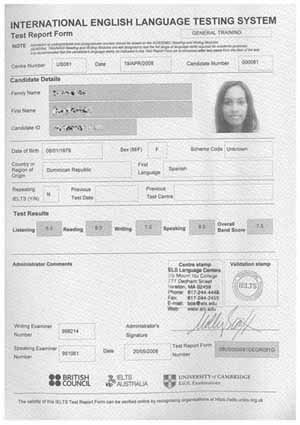
    Your Test Result page looks like this:
    IELTS test result example

    What we do is:

    1. Gather test results from people during this month
    2. Look for the one with the highest band score
    3. Declare a winner – and display the winning test result in IELTS TEAM blog.  
    4. Arrange an interview with the winner to find out what was the secret of his/her success in IELTS test.
    5. Publish the interview in IELTS TEAM Blog to help all the students achieve great results.

    Why do we have this IELTS test results competition? Because this is a great way for students to help each other by sharing knowledge. This competition will let many people benefit from high achievers’ advice and expertise.

    Sina’s tips for raising the score in Writing and Speaking

    If you’ve just joined IELTS TEAM, let me fill you in - yesterday we started discussing Sina's success story and this is the rest of it. Today I am bringing you his tips for Writing (where his score increased from 6.5 to 7.5) and Speaking (from 7 to 8). Sina suggests some pretty modern techniques for the people who prefer typing to actual writing and who prefer reading online to reading printed books, so I think you’ll find his ideas interesting. Here goes:

    Writing

    It’s paramount to learn the rules of the game here. Don’t ever assume that you write enough emails at work (very true for GT folks) and that will automatically take care of the writing part for you. Letter writing in IELTS has some rules that you got to play by and IELTS TEAM has done a wonderful job in his preparation book explaining all that you may need to know. The essay writing also requires that you adhere to IELTS rules, and it’s important to learn them. Again, IELTS TEAM does a terrific job  (and did I tell you, I don’t work for IELTS TEAM’s marketing department!).

    If you are not writing a CBT (Computer Based Test), then you are allowed to use a pen for the writing section. Practice and evaluate relative advantages or disadvantages of choosing one over the other. This is very important if you are at disadvantage with your handwriting; I had a serious problem here and it turned out that writing with a pen was a better choice for me.

    Practice to get an idea how many pages you may need to write to reach 250 words. This will vary depending on your handwriting. You can also check how many words you usually write per paragraph and that gives you an idea where you are.

    If you have spelling problems, use a text editor with spell check disabled or write in paper and then later transfer it to a text editor that can do a spell check for you. In writing, you will usually employ a few words always thats regardless of the topic. Practice is the only way you can detect and correct a spelling error. In the worst case, you can at least use alternative words when in doubt of your spelling.

    Speaking

    Enough has been said before and I’m not sure I can add much value here. If you think, you are very weak in speaking, one way to improve is to read a lot of blogs. The reason is, blogs are usually conversations, and the language used is somewhat closer to how you communicate through speech.

    The language and tone used in blogs are not excessively formal, but I would consider them to be informal for an IELTS writing. Still they help you with learning to frame complicated sentences. Of course, you should try to read blogs written by native English speakers.”

    How Sina raised his score from 7 to 8 - in less than a month

    I believe that success stories are important. They help your motivation, make you worry less about the exam and prove that it is possible to prepare and get a good score in a short period of time. Today I have one more success story for you - it’s about Sina, an Iranian student, who took IELTS twice and raised his score significantly.

    The exams were one month apart and after only 4 weeks of preparation Sina's overall Band score rose from 7 to 8. His weakest skills were Reading and Writing and amazingly he managed to raise his scores from 6.5 to 9 (!) in Reading and from 6.5 to 7.5 in Writing. In Reading the hardest task for Sina was True/False/Not Given questions, but even those he managed to get under control.

    We exchanged quite a few emails and Sina was very kind to share his tips and tell the rest of us how he prepared and what the reasons for his success were. I can’t call them “secrets” because after this post they are not “secrets” any more :) Anyway, let’s hear it from Sina:

    “Reading

    Though I was appearing for General Training exam, I did not break the convention and started off by attempting Academic tests. After a few initial obstacles and as I gained a reasonable control over the two essential skills of skimming and scanning, my scores began to ascend fast and I was getting full scores or near full scores. When I started with GT practice questions, the score dropped and after some analysis I found the reason. In Academic training, you get 3 passages that are big, and your biggest challenge is to get the gist of the passages with in a short period of time, but then the questions are usually easy!

    In GT, you get 5 passages and four of them are short, sometimes ridiculously short, and the last passage is similar to the Academic Training. In addition, the questions in GT are a bit tricky, except for the last paragraph that follows the academic convention. So, if you are in a hurry, and overdo the skimming and scanning you may loose sight of valuable details and fall into a trap. Remember, in GT you can only afford to have fewer incorrect answers when compared to Academic for the same band score.

    I’m not claiming this to be some science, but this worked for me. So, when you practice, analyze why your answers were incorrect, and I would even suggest you make note of the time you spent for each of the passages. Pay particular attention to T/F/NG and Simone has several valuable tips on this blog and in IELTS TEAM Preparation Courses and Materials.

    Also, IELTS MOCK practice tests which are presented by IELTS TEAM were same level compared to the test level was very lepful for me and release the exam stress.

    Listening

    This is one area where you can improve your score pretty quickly, if you learn how to listen with a purpose. If you are like me, and don’t watch much TV, then you can use some online materials in the form of podcast’s. TED.com is my favorite and I listen to a few other podcasts I download on technical subjects from several other sites - it’s both informative and helpful for your test. BBC News site has several such podcast’s for you.”

    In my next post I will share Sina’s tips for the Writing and Speaking tests. Oh, and just before I forget: if you feel that you didn’t do well in the exam, wait until you get the results. Even Sina, who got 9 for Reading after the exam told me that he was disappointed with his performance.

    IELTS TEAM

    Official Demo Website


    برای کسب اطلاعات


    بیشتر آرشیو


    موضوعی را ببینید.

    Listening: The right way to answer

    Continuing the previous post, here comes

    Listening Tip # 4 - Answer as you listen


    What I mean here is that you need to listen and write the answer at the same time.
    Make no mistake - it is not a very natural thing for you, so you have to practice a lot in it.
    The reason you have to “answer as you listen” is that you immediately forget the sentences after you have heard them. This is what stress, foreign language, constant flow of information does - it makes you forget. After hearing the third sentence you won’t be able to repeat the first. It means that when any part of Listening is over - you won’t be able to remember any of answers. So write them as you hear them, leave nothing for later.

    What you need to know about Answer Sheet

    Answer Sheet is a very important piece of paper.

    First of all, your score for Reading and Listening tests is calculated based on what you have written on it - only! It means that if you’ve got all the Reading/Listening test answers right but didn’t copy them from the booklet to the Answer Sheet, you score ZERO for the whole Reading/Listening test. I have read in IELTS official site that you can request later that they check your booklet for answers, but honestly - who needs the head ache?

    Second, it is best that you look at it before you go to take IELTS because it has this certain structure you need to be familiar with. There are 2 sides you must fill, one for Listening and the other one for Reading answers and they look very much alike. It is very easy to mix them and start writing answers on the wrong side, so check and see what’s printed above the table with answer numbers 1-40, “IELTS Listening Answer Sheet” or “IELTS Reading Answer Sheet”.

    Third, when you are training (with clock) for IELTS, you should include in your practice copying your answers to the Answer Sheet. This way you imitate the whole IELTS process better and get used to dividing your time correctly.

    So here use this link to PDF file from IELTS official site, open it, go to page 8 and see for yourself what IELTS Answer Sheet looks like - click here.

    Listening: Distractions

    Continuing the previous post, here comes

    Listening Tip # 3 - don’t let them distract you
    (oh boy, they are good at that! :) )

    In Listening section of IELTS the recording “speaks” several different voices - of younger and older people, men and women. You may also hear different accents - Australian, British, American, Japanese, etc. The background noise is also different. It can be of airport, cafe-shop, street, University lecture hall, you name it. Be ready for it and don’t let it distract you - because that is exactly what they want. Ignore the noises and listen for the answers.

    Of course, the accent you hear the most is British. Suggestion: when you are studying for IELTS, listen to as much British accent as you can. Where can you get it? I liked what BBC have - visit BBC site by clicking here. You can listen there to news (and read the transcript), learn the news vocabulary, learn the pronunciation, etc. Try it, you might like it.

    A very good site to use for listening exercises in American English is VOA News - click here to visit it. This is how they recommend using their site:
    “The short sentences, limited vocabulary and slow pace of speaking make it easy to understand. It succeeds in helping people learn English in a non-traditional way. People around the world practice their listening and speaking skills by recording the programs and playing them repeatedly. Internet users can also listen to programs on the Special English Web site while reading the text.”

    Hang in there, people, more tips are coming!

    درباره آزمونهای IELTS MOCK

    آزمون IELTS، به نوعی طراحی شده که قادر است ميزان معلومات داوطلبان در سطوح مختلف از زبان انگليسی را سنجيده و با توجه به استاندارد IELTS طبقه‌بندی کند. شرکت‌کنندگان در اين آزمون به طيف متنوعی از سوالاتپاسخ می‌دهند و در پايان با توجه به نمره‌ای که از هر‌يک از چهار‌بخش مختلف دريافت‌کرده‌اند سطحی مابين نا‌آشنای کامل به زبان انگليسی، با  نمره ۰تا سطح آشنای کامل به زبان انگليسی، با نمره ۹، طبقه‌بندی می‌شوند. 

    با توجه به آنچه از نتایج آزمونها و گفته هاي زبان آموزان بر می آید، اخذ این مدرک چنان هم سهل الوصول نیست!  شرکت در کلاسهای مختلف ، مطالعه منابع درسی متفاوت از جمله راهکاری متداول برای موفقیت در آزمون هستند .بدون شک آموزش همواره نیازمند ارزیابی و بررسی روند پیشرفت است . خصوصاً در مواردی چون آزمون IELTS آشنایی با انواع سؤالات ، مدیریت زمان در آزمون و روش های پاسخگویی به سوالات موضوعاتی به مراتب حائز اهمیت هستند .

    مفتخریم با برگزاری آزمون های هماهنگ، استاندارد و جامع هفتگی و ارائه برنامه ریزی مطالعه ، پشتیبانی آموزش و جلسات رفع اشکال ، شما را در هر چه راحت تر پیمودن این مسیر راهنمایی می نماییم .

    بدون‌ شك‌ مي‌توان‌ مهمترين‌ علت‌ عدم‌ موفقيت‌ داوطلبان‌ ايراني‌ در آزمون‌ IELTS را عدم‌آشنايي‌ داوطلبان‌ با شرايط‌ واقعي‌ برگزاري‌ آزمون‌ بين‌المللي‌ IELTS دانست. ‌ IELTS TEAM در يك‌ برنامه‌ منسجم‌ طي‌ 10مرحله‌ برگزاري‌ آزمونهاي‌ استاندارد بين‌المللي‌ IELTS Mock Exam  اين‌ نقيصه‌ مهم‌ را كاملاً برطرف‌ نموده‌ است‌. (طي‌ برنامه‌ 10 هفته‌اي‌ هدفمند كه‌ درابتداي‌ دوره‌ به‌ زبان‌آموز ارائه‌ مي‌گردد، موارد ارزيابي‌ در آزمون‌ هر هفته‌ مشخص‌گرديده‌ و داوطلب‌ طبق‌ اين‌ برنامه‌ هدفمند، برنامه‌ مطالعه‌ خود را تدوين‌ مي‌نمايد. تفكيك‌ مطالب‌ محتوايي‌ آزمونهاي‌ IELTS به صورت مرحله اي‌، نقاط‌ ضعف ‌و قوت‌داوطلب را  طي‌ آزمونها مشخص‌ كرده‌ و زبان آموز  زيرنظر اساتيد مركز به‌ راحتي ‌نسبت‌ به‌ تعديل‌ وضعيت‌ خود در مهارتهاي‌ مورد ضعف‌ اقدام‌ مي‌نمايد. لازم‌ به‌ ذكر است‌آزمون‌ دهم از مجموعه‌ آزمونهاجامع‌ بوده‌ كه‌ در واقع‌ يك‌ شبيه‌ سازي‌ كاملاً استاندارد شده‌ آزمون‌ اصلي‌ IELTS مي‌باشد.) 

    آزمونهايIELTS TEAM از شرايط‌ منحصر به‌فردي‌ برخوردار است‌ كه‌ در زير به‌ تفصيل‌ به‌ آن‌ اشاره‌ شده‌ است‌:

     1- سئوالات و شرايط برگزاري استاندارد

    در طراحي‌ بانك‌ سئوالات‌ امتحاني‌ آزمونهاي‌ IELTS TEAM، نهايت‌ استاندارد علمي‌ ممكن‌ درنظر گرفته‌ شده‌ است‌، شايان‌ ذكر است‌ تقريباً تمامي‌ موارد مطروحه‌ در آزمونها ،بين‌المللي‌ مي باشد.  

    2-ارائه‌ كارنامه‌ استاندارد آزمون‌ و پاسخنامه‌ تشريحي‌

    3- ارائه‌ نمودارهاي‌ علمي‌ تجزيه‌ و تحليل‌ آماري‌ آزمون‌

    4- جلسات‌ رفع‌ اشكال‌ و حل‌ تشريحي‌ آزمونها

      5-ارائه‌ دفتر هدفمندي‌ برنامه‌ريزي‌ آزمون‌ IELTS 

    برنامه‌ريزي‌ ‌ مطالعاتي‌ IELTS ازجمله‌ اجزاي‌ اصلي‌ موفقيت‌ در آزمون‌نهايي‌ مي‌باشد. هريك‌ از زبان‌آموزانIELTS TEAM ‌، مطابق برنامه‌ مطالعاتي‌ تدوين شده IELTS TEAM براي آزمون آماده مي شوند. اين برنامه سبب مي شود تا از سردر گمي داوطلبان جلوگيري شده و پيشرفت آنها به طور ملموسي قابل اندازه گيري و سنجش باشد. 

      6-طرح‌ ثبت‌ نام‌ كليه‌ زبان ‌آموزان‌ در آزمون‌ اصلي‌ IELTS

    IELTS TEAM جهت‌ جلوگيري‌ از مسائل‌ جانبي‌ ثبت‌ نام‌ و اتلاف‌ وقت‌ زبان‌آموزان‌ خود و درصورت‌ تمايل‌ داوطلبين‌، كليه‌ امور ثبت‌ نامي‌ آزمون‌ اصلي‌ IELTS را انجام‌ مي‌دهد.

     7-طرح‌ بيمه‌ IELTS

    IELTS TEAMبا هدف‌ حمايت‌ و قدرداني‌ از داوطلبان‌ جدي‌ خود در سري‌ آزمونهاي‌ برگزارشده‌، همچنين‌ ايجاد جو رقابت‌ سالم‌ و تشويقي‌ در راستاي‌ ارتقاء سطح‌ كيفي‌ آزمونها و بالطبع‌ موفقيت ‌نهايي‌ كليه‌ داوطلبان‌ در آزمون‌ اصلي‌، طرح‌ بيمه‌ IELTS را اجرا  مي‌نمايد. طبق‌ نظرسنجيهاي‌ بعمل‌ آمده‌ از اعضاي‌ خانواده‌ IELTS TEAM، اين‌ طرح‌ از جمله‌ مؤثرترين‌ و آرامش‌ بخش‌ترين‌ خدمات‌ ا رائه‌ شده‌ به‌ زبان‌آموزان‌ گرامي‌ مي‌باشد.

    طبق‌ اين‌ طرح‌ و به‌ استناد ضمانتنامه‌ مذكور، IELTS TEAMكتباً تضمين‌ مي‌نمايد که حداقل نمره زبان آموز در هر یک از مهارتها در آزمون اصلی برابر با میانگین وی در 10 آزمون باشد.

    به این مثال توجه کنید :

    زبان آموزی در 10 آزمون نمرات ذیل را در مهارت نوشتن کسب کرده است :

    4.5  -  5  -  4  -   6  -  5.5  -   5   -  7  -  6 - 7 - 6

    میانگین این زبان آموز در آزمون ها 5.5 خواهد بود و طبق شرایط بیمه ، اخذ حداقل نمره 5.5 در آزمون برای وی کتباً تعیین می گردد.و در صورت عدم کسب این حد نصاب ، عيناً تمام مبالغ پرداختی مسترد خواهد گردید.

    LISTENING: A SKILL not a GIFT

    Listening is very often your biggest problem. I know it because almost all my IELTS-taking friends had trouble there. Your Listening ability in many cases is not developed enough. But the good news is that Listening is a skill, not a gift, which means anyone can learn how to listen and understand (almost :)) every word. My friends and I came up with this technique that worked for us.

    What usually happens:

    You listen and hear “Blablablablabla”, which you can’t to break into words, and for that reason it makes no sense to you. There is a big difference between seeing a word printed on paper when you read and hearing it. If you saw a word, it doesn’t mean you will recognize it when you hear it. Every word you have read, you need to hear at least once.

    What can be done about it:

    You need to teach yourself the words

    How do you do it:

    When training, take a recording of the news, lecture, television program movie or an actual IELTS Listening test and work with it.

    Listening Tip # 1 - use transcript.

    Use an IELTS Listening test - just choose from all the links in the right sidebar. You need a test that has transcript, so I suggest Listening test # 1 (be patient, their site is slow).
    First try just listening, to get used to the accent. Then start working with a recording and a transcript: go over the recording, stop it every sentence and use transcript to make sure that you understand every word.

    Listening Tip # 2 - repeat phrases

    You can use any recording. First, listen, remember what you heard and stop the recording after each phrase. Even if you didn’t understand the phrase, play it in your head a couple of times, like a broken record “Tonight we have a special guest”, “Tonight we have a special guest”, “Tonight we have a special guest”.
    Then say it out loud. If you understood that phrase at first, this exercise will improve your pronunciation. If you didn’t understand the phrase for the first time, this repetition will give you more time to hear it better, break it into words and make sense out of them. And if it is still difficult, you can always rewind and hear the phrase again.

    مشكلات مهاجرين در استراليا

    مهاجرت ، قمار زندگي است و همچنان كه مي تواند باعث بروز تحولات بسيار مثبتي براي زندگي يك خانواده باشد ، مي تواند عامل ناكامي و از هم پاشيدگي اركان خانواده نيز قلمداد شود. عموماً ، سال اول زندگي مهاجرين شاهد بيشترين ناملايمات و تنش هاي زندگي است؛ كه در اين ميان ، بسياري از مهاجرين تاب تحمل مشكلات را ندارند و لذا زندگيشان دستخوش صدمات جبران ناپذيري مي شود.

    متاسفانه هنوز آماري در خصوص درصد موفقيت مهاجرين نسل اول ايراني در استراليا منتشر نشده و همين موضوع زواياي زندگي و ميزان موفقيت ايرانيان در استراليا را مشخص نكرده است ؛ اما آنچه كه واضح است تمامي افراد جامعه ايراني از حداقل رفاه نسبي كه بر مبناي اصل عدالت اجتماعي در تمامي اركان جامعه استراليا وجود دارد برخوردارهستند. و بعضي از مهاجرين ايراني در ازاي اين برخورداري نسبي از رفاه مادي ، بهاي سنگيني را نيز پرداخته اند كه طلاق ، اعتياد و بيماريهاي روحي و رواني از آن جمله است.

    سالهاي ابتدايي مهاجرت به استراليا ، سالهايي سخت، پرتنش و سرشار از تناقضات فرهنگي و اجتماعي براي مهاجرين ايراني است . بسياري از مهاجرين ، قبل از ورود به استراليا به سختي مي توانند متصور شوند كه مهاجرت چه كار سخت و طاقت فرسايي است و به اين سادگي نمي توان در موطن جديد ريشه دواند و به اصطلاح جا افتاد. لذا بعضي از مهاجرين دچار آسيب هاي روحي رواني مي گردند كه تا سالها با آن كلنجار مي روند.

    مشكلات روحي – رواني مهاجرين

    زندگي ايراني ، زندگي خانواده محور است كه هويت تمامي افراد بر مبناي نقش آنان در خانواده تعريف مي شود. در مدل زندگي ايراني، پدر بزرگ ،‌ مادر بزرگ ، پدر ، مادر ، برادر و خواهر تنها به معناي نسبي كلمه در زندگي شخص نقش ندارند، بلكه كانون مهر وعاطفه ، نقطه اتكا و در بياني ديگر كليد حل مشكلات تك تك اعضاي خانواده به شمار مي آيند و اين دقيقاً عكس آن چيزي است كه در زندگي غربي وجود دارد . در زندگي غربي خانواده كاركردي فرد محور دارد و استقلال اعضاي خانواده از نكات بارز زندگي غربي است .

    يكي از مشكلات مهاجرين ايراني در استراليا جدايي از نهاد خانواده مي باشد. بسياري از مهاجريني كه از ايران پا به استراليا مي گذارند بدليل جدايي از كانون گرم خانواده خود دچار مشكلات روحي و رواني مي شوند.و در اين زمينه ، وضع كساني كه بصورت پناهنده سياسي يا اجتماعي به استراليا آمده اند بدتر است چون بطور طبيعي آنان بازگشتي براي خود به ايران متصور نيستند و اين دوري، مشكلات روحي و رواني آنان را در دوچندان مي كند. از طرفي ، تحمل اين وضعيت براي نوجوانان و جوانان ايراني در مقايسه با بزرگترها سخت تر است.

    مهدي كه بهمراه همسر و دو فرزندش مدت ده سال است به استراليا مهاجرت كرده خاطرات تلخي از دوران اوليه ورود به استراليا دارد. او مي گويد: " زندگي ايراني مجموعه اي از عاطفه است كه در استراليا همتايي براي آن نمي توان يافت . در استراليا فقط روابط اقتصادي بر زندگي افراد حاكم است و روابط عاطفي نقش كم رنگي دارد. زندگي ايراني، ‌زندگي تنهايي نيست،‌ زندگي سكوت نيست بلكه زندگي بمعناي حضور موثر در مشكلات خانوادگي است . در ايران خانواده ها غمخوار يكديگرند ،‌اما در اينجا خبري از اين حرفها نيست. "

    اولين مشكلي كه مهدي در ماههاي اوليه زندگي خود با آن مواجه شد ، مشكل افسردگي فرزندش بود . مهدي مي گويد:" متاسفانه پسرم پس از حضور از استراليا از دوستان و همبازيهاي فامليش جدا شد و بدين سبب دچار افسردگي حاد شد . و اين مشكل سواي تمامي مشكلات زندگي در غربت ، غم عميقي بر روح و روان ما به جاي گذاشت و نمي دانستيم كه بايد چكار كنيم. خدا را شكر كه پس از ماهها و با مشورت پزشكان توانستيم مجدداً شادي را به زندگي پسرم باز گردانيم... سالهاي ابتدايي زندگي ما در استراليا را هيچگاه دوست ندارم كه بياد آورم."

    مشكلات روحي و رواني كه زندگي در غربت بر تن و روان مهاجرين وارد مي سازد تنها شامل زندگي فرزندان نمي شود ، بلكه پدران و مادران نيز در معرض آسيب پذيري هستند . شايد كمتر كسي متوجه اين واقعيت باشد كه كساني كه سالهاي سال در ايران زندگي كرده اند ريشه در خاك داشته اند و جزيي از بدنه يك خانواده بزرك بوده اند و بمحض اينكه از بدنه خانواده خود بقصد مهاجرت جدا مي شوند ، همچون نهالي مي شوند كه در سرزمين جديد خود بايد مجدداً رشد كرده و لذا ممكن است با وزش هر بادي اين نهال تازه از بن كنده شود و به اين سو و آن سو برود.

    زندگي ستاره و امين ، زوج جواني كه زندگي خود را در ايران آغاز كردند و پس از اخذ ويزاي دائم به استراليا مهاجرت كردند نيز دستخوش مشكلات روحي و رواني بسياري شد. ستاره فرزندي برخاسته از جامعه سنتي ايراني است كه در آن ديدار و درد ودل هفتگي با مادر جزء‌ لاينفك زندگي است. ستاره پس از اقامت در استراليا طبعاً ديگر نتوانست به ديدن مادرش برود و حضور همسرش امين در كنار او نيز جاي مادرش را پر نمي كرد. بدين سبب ستاره دچار افسردگي شديد شد و غم غربت بر زندگي او سايه افكند. ستاره مي گويد: " ديگر هيچ چيزي در استراليا مرا خوشحال نمي كرد . اگرچه من در ايران با مادرم هميشه اختلاف عقيده داشتم و دائماً با هم دعوا ميكرديم ، ولي حضور در كنار مادر تنها آرزوي من در استراليا بود . از طرفي نه مي توانستم امين را با اين همه مشكلات مهاجرت تنها بگذارم به ايران بروم و نه ميشد مادرم را به دليل مشكلات مالي اينجا بياورم و به همين دليل دچار افسردگي حاد شدم."

    امين نيز به تلخي از آن دوران ياد مي كند و مي گويد: " باورم نمي شد كه در ظرف مدت شش ماه 15 كيلو لاغر شوم. من كه آدمي سرزنده در ايران بودم ، وقتي كه به استراليا مهاجرت كردم خرواري از مشكلات و مصائب بر سرم ريخت. از يك طرف نتوانسته بودم كاري را در استراليا پيدا كنم و از طرفي ستاره دچار افسردگي شديد شده بود . بدبختي اين بود كه شرايط مالي بهيچ وجه اجازه نمي داد كه او را براي مدتي به ايران بفرستم و به همين خاطر درمانده شده بودم و تازه آنجا بود كه معناي حضور خانواده را فهميدم ."

    خوشبختانه زندگي ستاره و امين به سرانجام خوبي رسيد و يك فرد نيكوكار ايراني وقتي كه از داستان زندگي آنان اطلاع يافت امين را به كاري گمارد و مخارج سفر ستاره را به ايران فراهم كرد.

    شرايط محيطي و جغرافيايي

    شايد كمتر كسي پيش از مهاجرت ، اهميتي براي نقش شرايط جغرافيايي و آب و هوا بر سرنوشت زندگي اش در استراليا قائل باشد ،‌ اما بايد اذعان كرد كه كه در ماهها و حتي سالهاي اوليه، آب و هوا نقش بسيار عظيمي بر زندگي مهاجرين ايراني در استراليا دارد.

    عمده مناطق ايران داراي آب و هواي گرم و خشك هستند و بدن ايرانيان ساليان سال خود را با چنين شرايط آب و هوايي تطبيق داده است . از طرفي ديگر باتوجه به اينكه عمده شهر هاي استراليا در حاشيه اقيانوس واقع شده و از رطوبت نسبتاً بالايي برخوردار است ، لذا تغييرات آب و هوايي تاثير عميقي بر ساز و كار و فعاليت اندامهاي مهاجرين بر جاي ميگذارد.

    بسياري از خانواده هاي ايراني پس از ورود به استراليا و با توجه به اينكه بدن آنان در معرض ميكروب ها و ويروسهاي جديدي قرار ميگيرد كه نظير آن در ايران وجود نداشته ، به بيماري هاي مختلفي دچار مي شوند و زمان زيادي سپري مي شود تا بدن آنان خود را در مقابل ويروسهاي جديد مجهز نمايد.

    متاسفانه آب و هواي استراليا به گونه اي است كه درصد ابتلاي كودكان به آسم بسيار زياد است و برخلاف ايران ابتلا به آسم در ميان كودكان و بزرگسالان امري عادي است ، اما براي يك خانواده ايراني كه به اميد پيشرفت و زندگي بهتر به استراليا مهاجرت كرده اند ، ابتلاي فرزندشان به آسم امري زجر آور و ناراحت كننده است.

    ساناز دختر 4 ساله اي است كه در ايران متولد شد و پس از اينكه به همراه خانواده خود به استراليا مهاجرت كرد دچار آسم شد. سعيد پدر ساناز مي گويد: " تازه 2 ماه بود كه از ايران با مشكلات بسيار به سيدني آمديم و يك شب بهنگام خواب متوجه شدم كه ساناز نمي تواند بخوبي نفس بكشد.. مستاصل و درمانده شده بودم و نمي دانستم چكار كنم . نه آدرس بيمارستاني را مي دانستم و نه فاميلي در ‌سيدني داشتم .. حتي نمي دانستم كه چطور مي توان تنفس مصنوعي داد ..ترس عجيبي بر وجودمان حاكم شده بود و به تنها ايراني كه در سيدني مي شناختم زنگ زدم و او در ظرف 10 دقيقه به منزلمان آمد و ساناز را به بيمارستان برديم . سپس او را فوراً به اورژانس بردند و زير ماسك اكسيژن قرار دادند. واقعاً لحظات تلخي بود و من دوست ندارم كه آنرا بياد آورم." پزشك متخصص تشخيص داد كه ساناز به بيماري آسم دچار شده است و بايد تحت نظر پزشك باشد .

    عموماً بيشتر مهاجرين در ماههاي اوليه مهاجرت به بيماريهاي مختلف دچار مي شوند. سعيد مي گويد: " شايد در 6 ماه اوليه اقامتمان در استراليا بيش از 40 بار به پزشك و بيمارستان مراجعه كرديم . واقعاً شانس آورديم كه هزينه هاي دكتر و بيمارستان در استراليا مجاني است و مهاجرين هيچ بهايي بابت آن پرداخت نمي كنند.يادم مي آيد يكبار من و همسر و دخترم هر سه با هم در منزل مريض بوديم و هيچ كس هم نبود كه از ما مراقبت كند ... واقعاً شرايط جغرافيايي اثرات بسياري بر بدن انسان دارد و اين چيزي است كه بسياري از مهاجرين پس از حضور در يك كشور ديگر تازه به اهميت آن پي مي برند."

    پيدا كردن كار، بزرگترين مشكل

    سخني گزاف نيست اگر بگوييم كه يافتن شغل مناسب و درخور مهمترين مشكل ايرانيان در استراليا است و دانستن زبان انگليسي كليد بازگشايي اين قفل بسته. ما براي اين ممكلت ساخته نشده ايم ،‌عبارت مصطلحي هست كه زياد بر زبان ايرانيان جاري مي شود . اما در استراليا بايد در نهايت فرد خود را براي كار دلخواه و مورد پسندش بسازد زيرا راه ديگري وجود ندارد.

    در استراليا عموماً دو نوع محيط كاري را براي ايرانيان مي توان متصور شد: اولي عبارت است از مشاغلي كه ايرانيان در آن نقش كار فرما دارند كه بخش بسيار كوچكي از فضاي كاري استراليا را شامل مي شود . اين مشاغل معمولاً نقاشي ساختمان ، كارهاي فيزيكي و ساختماني ، مكانيكي و در كل كارهاي خدماتي را شامل مي شود و محيط دوم مشاغلي است كه كارفرماياني غير ايراني بر آن احاطه دارند و بيشتر داشتن تجربيات كاري و تحصيلات مرتبط شرط حضور در آن است.

    بطور معمول كارفرمايان ايراني بر روال همان روابطي كه در بازار كار ايران براي استخدام يك فرد حاكم جاري است در استراليا نيز عمل مي كنند. يعني بصرف آشنايي و ضمانت افراد و بدون در نظر گرفتن تجربيات كاري. بي انصافي است كه كارارزشمندي كه اين كارفرمايان در بدو ورود افراد به استراليا انجام مي دهند ناديده گرفته شود،‌ اگرچه ايراداتي همچون ميزان كم دستمزد و يا دير كرد در پرداخت ها به آنان وارد است.

    بزرگترين مشكلي كه براي مهاجرين وجود دارد ورود به بازار كار واقعي در استرالياست جايي كه افراد به ميزان تجربيات و تحصيلاتشان ارزشگذاري مي شوند نه به زور بازو. بايد اعتراف كرد كه حضور در جامعه كار استراليا فرآيندي بسيار طولاني و پيچيده دارد و بسيار طاقت فرساست. عموماً مهاجريني كه از ايران به استراليا مي آيند داراي سوابق درخشان كاري و چه بسا تجربه مديريت در سطوح بالا را با خود يدك مي كشند ، اما متاسفانه كارفرمايان استراليايي بيشتر به داشتن سابقه كار محلي علاقه نشان مي دهند نه آنچه كه فرد در كارنامه كاري خود در ايران بر جاي گذاشته.

    علي كه سابقه 15 سال مديريت در سطوح بالاي سازمانهاي ايراني را دارد ، بهيچ وجه نتوانست كاري هم سطح و يا حتي كمتر از تجربياتش در استراليا بيابد . او مي گويد: " ساز وكار و روابط حاكم بر محيط هاي كاري در ايران بهيچ وجه قابل مقايسه با استراليا نيست . ايراني اقيانوسي است به عمق يك بند انگشت ولي در استراليا ترجيح مي دهند كه بركه اي آب را بيابند كه ده متر عمق داشته باشد. من در ابتدا وقتي براي مراكز مختلف درخواست كار مي فرستادم ، بدون استثناء درخواست هاي كارم رد مي شد و حتي به مرحله مصاحبه هم نمي رسيد. بعدها متوجه شدم كه ذكر سوابق مديريتي متعدد در كارنامه كاري ام خود عاملي بازدارنده است و به اصطلاح over-qualified هستم . بدين خاطر مجبور شدم كه دوره هاي كوتاه مدت را در مراكز آموزشي بگذرانم و سپس از كارهاي بسيار كوچك دفتري شروع كنم."


    اما وضع كار براي تمامي مشاغل بدين گونه نيست . معمولاً فارغ التحصيلان رشته هاي مرتبط با فن آوري اطلاعات از وضع بهتري بر خوردار هستند و با توجه به بازار كار مناسب استراليا بسرعت جذب مشاغل مورد نظر خود مي شوند.

    محسن كه مهندس كامپيوتر است مي گويد: " در زمينه فن آوري اطلاعات زمينه كار مناسبي وجود دارد و اكثر ايرانيان مشاغل درخور توجه دارند. شايد يكي از دلايل عمده آن كار با كامپيوتر بجاي سر وكله زدن با ارباب رجوع است. معمولاً كارفرما، فلان برنامه كامپيوتري را از شما مي خواهد و شما در مهلت مورد نظر كار را بايد تحويل دهيد. به همين سادگي"

    يكي از راههايي كه بيشتر ايرانيان براي فرار از انجام كارهاي پيش پا افتاده و با هدف يافتن كار مناسب در استراليا انجام مي دهند ادامه تحصيل در دانشگاه است. حضور در دانشگاه ،‌ فرصت هاي شغلي زيادي را نصيب ايرانيان مي كند و كمك مي كند تا ايراني جايگاه واقعي خود را در بازار كار استراليا بدست آورد. نويسنده: بابك عظيمي

    مشكلات مهاجرين ايراني


    نگاهی به مشکلات مهاجرین ایرانی در استرالیا

    شايد براي بيشتر ايرانياني كه هنوز پا به دنياي غرب نگذاشته اند تصويري كه از زندگي مهاجرين ايراني در استراليا در ذهنشان نقش بسته معادل با تفريحات شبانه روزي ، حمام آفتاب در كنار دريا و آزاديهاي بي حد وحصر جنسي باشد. اما اين تصوير چقدر به واقعيت زندگي ايرانيان در استراليا نزديك است؟ آيا مهاجرين ايراني در استراليا دائماً در حال خوشگذراني هستند و تمامي اوقات خود را يا در لب ساحل بسر مي برند و يا با قايق هاي شخصي خود در دل اقيانوس به ماهيگيري مشغولند؟

    زندگي در استراليا برخلاف ظاهر فريبنده اي كه ممكن است داشته باشد كار چندان ساده اي نيست و از بسياري جهات سخت تر از زندگي در ايران مي باشد . مهاجرين ايراني پس از ورود به استراليا با مشكلات عديده اي روبرو هستند كه عمده اين مشكلات بخاطر تفاوت هاي فرهنگي،‌ اقتصادي و اجتماعي عميقي است كه سبك زندگي در استراليا با نوع ايراني خود دارد. همچون ديگر كشورهاي غربي ، اساس و پايه زندگي در استراليا بر مبناي قانون است و بنظر مي رسد مهمترين عامل اصطكاك جامعه مهاجرين ايراني با زندگي در استراليا، از عدم شناخت كافي به قوانين حاكم در استراليا بعنوان سرلوحه تمام رفتارهاي اجتماعي و فردي تمامي آحاد جامعه نشآت مي گيرد.

    روحيه قانون گريزي ايراني كه بدليل بافت فرهنگي و اجتماعي زندگي در ايران شكل گرفته و عكس العملي طبيعي در مقابل عدم پايبندي تمامي اركان جامعه به قوانين در ايران است، عملاً در زندگي غربي و بويژه در استراليا كاربردي نداشته و راه به جايي نمي برد. در استراليا همه در مقابل قانون يكسانند و مرتبه اجتماعي افراد و ميزان تمول آنان هيچ تاثيري در اجراي قانون ندارد. از اين رو، در مواجهه با تخلفات قانوني، تعابيري همچون من پسر آقاي فلاني ام و يا جون سركار بيخيال جريمه شو پول چاي ات رو من ميدم كمترين معنا را براي فرار از اجراي قانون در استراليا دارد.

    ‌ هموطن ايراني كه سالهاي سال طعم لذت بخش و شيرين فرار از اجراي قانون را در ايران چشيده است، پس از ورود به استراليا، به يكباره خود را در قفسي گرفتار مي بيند كه ارزش افراد در برابر قانون فقط بر مبناي عملكرد آنان تعيين مي شود و نه بر اساس اصل و نسب ويا طبقه اجتماعي فرد. و در اين ميان، آگاهي نداشتن از قانون دليل موجهي براي قانون شكني و قانون گريزي تلقي نمي شود. لذا، اولين سدي كه در پيش روي مهاجر ايراني در استراليا وجود دارد آگاهي يافتن از كليه قوانيني است كه بايد در زندگي روزمره التزام و پايبندي خود را به آن نشان دهد،‌ در غير اينصورت هرگز با ديگر اقشار جامعه همگون نخواهد شد. بهمين خاطر براي آگاهي يافتن از قوانين استراليا، دانستن زبان از واجبات است و كمك شاياني در ادغام فرد در جامعه جديد خود مي كند.

    زبان انگليسي ، پاشنه آشيل ايراني

    متاسفانه نظام آموزشي در ايران بگونه اي طراحي شده كه كمك چنداني به يادگيري زبان انگليسي به افراد نمي كند و بيشتر ديپلمه هاي ايراني و يا حتي فارغ التحصيلان دانشگاهي اگر بطور خصوصي به يادگيري زبان اهتمام نكرده باشند، قادر نيستند به مدت 5 دقيقه در مورد يك موضوع به انگليسي صحبت كنند و يا يك صفحه مطلب به انگليسي بنويسند. بدين خاطر، سخني گزاف نيست اگر بگوييم كه عدم تسلط كافي به زبان انگليسي عمده ترين مشكل ايرانيان در خارج از كشور و بويژه در استرالياست و درست همين نقطه ، پاشنه آشيل آسيب پذيري مهاجرين ايراني به شمار ميرود.

    دانستن زبان انگليسي عملاً شاه كليد ورود به تمامي اركان جامعه در استرالياست و شايد كمتر ايراني مهاجري را ميتوان يافت كه بدون تسلط به زبان توانسته باشد مدارج ترقي را در استراليا طي نمايد. براي مهاجرين تازه وارد، دولت استراليا ليست كاملي از كارهايي كه بايد آنرا به انجام رسانند منتشر كرده ، اما در حقيقت بدليل اينكه انجام هر يك از اين كارها نياز به دانش زبان در آن حوزه خاص دارد انجام دادن اين ليست چالش هاي بسياري براي مهاجرين به همراه دارد. افتتاح حساب بانكي ، گرفتن شماره بيمه مالياتي، ثبت نام در طرح هاي درماني، اجاره مسكن و ... از جمله كارهايي است كه مهاجر بايد در بدو ورود خود اقدام نمايد. اما ، با توجه به اينكه انجام هريك از اين كارها اصطلاحات انگليسي خاص خود را دارد ، لذا، عمل كردن به آنان براي مهاجرين تازه وارد كاري طاقت فرسا و استرس آور است.

    فريبرز كه مهندس راه و ساختمان است و 2 سال پيش به استراليا مهاجرت كرده در اين باره مي گويد:" من قبل از مهاجرت سالها زبان مي خواندم و حتي براحتي نمره 6 را در امتحان IELTS كه براي اخذ ويزاي دائم لازم است را بدست آوردم ،‌اما بمحض ورود به استراليا متوجه شدم كه دانش زبان من محدود به يكسري لغات و اصطلاحات تخصصي و ادبي انگليسي است كه در واقعيت زندگي روزمره ام كمترين كاربرد را دارد."

    تسلط به زبان، نقش اساسي در يافتن كار براي مهاجرين دارد و اگر فرد عليرغم داشتن تحصيلات عاليه نتواند به انگليسي تكلم كند بايد يا به مشاغل خدماتي همچون ظرفشويي، كارواش ، نقاشي ساختمان ، موزائيك كاري و ... كه ندانستن زبان نقش چنداني در انجام كار ندارد تن در دهد و يا در محيط هايي كار كند كه تماماً افراد به زبان فارسي صحبت مي كنند.

    فريبرز ادامه مي دهد: " با توجه به اينكه مهندسين راه و ساختمان بازار كار خوبي در استراليا دارند و من نيز حدود 5 سال تجربه اينكار را در ايران داشتم اما هر بار كه براي شغلي اقدام ميكردم و در مصاحبه ها حاضر ميشدم بدليل عدم تسلط به زبان قادر به گرفتن شغل نمي شدم و اين موضوع بيش از 50 بار براي من اتفاق افتاد. در استراليا بازار كار بسيار رقابتي است و زبان انگليسي مهمترين نقش را دارد. و من به اين نتيجه رسيدم كه بايد براي يادگيري زبان انگليسي كاربردي وقت بگذارم"

    نكته ديگر در خصوص زبان، ‌تفاوت در لهجه انگليسي استراليايي است. چه بسا بسيار كساني هستند كه به زبان انگليسي تسلط كامل دارند ،‌اما پس از مهاجرت ، به دليل لهجه متفاوت استرالياييها تا مدت هاي مديدي دچار برداشت هاي اشتباه در محيط هاي كاري و يا ادارات ميشوند. بدين خاطر ، چه خواسته و چه ناخواسته زماني زيادي طول مي كشد كه مهاجر ايراني بتواند با محيط خود تعامل مثبت داشته باشد.


    رانندگي در استراليا

    قوانين راهنمايي و رانندگي در استراليا تفاوت هاي بسياري با ايران دارند و همين تفاوت ها باعث بروز سردرگمي هاي زيادي براي مهاجرين ايراني مي شوند. جدول بندي و خط كشي خيابانها، علائم راهنمايي و رانندگي و بويژه قرارداشتن فرمان در سمت راست ماشين از بارزترين تفاوت هايي است كه مي توان نام برد. و از اين رو تطبيق با شرايط جديد رانندگي ممكن است براي بسياري از ايرانيان ماهها و شايد سالها به طول انجامد.

    گرفتن گواهينامه رانندگي در استراليا كار ساده اي نيست و با توجه به اينكه داشتن گواهينامه يكي از مدارك معتبر براي شناسايي فرد و همچنين رتق و فتق امور اداري است ، در نتيجه بايد براي گرفتن آن هر چه زودتر اقدام كرد. عموماً ايرانياني كه پا به استراليا ميگذارند از قبل داراي گواهينامه ايراني هستند و خوشبختانه دولت استراليا شرايط نسبتاً منصفانه اي را براي تبديل گواهينامه آنان به گواهينامه استراليايي فراهم كرده است،‌ اما بهرجهت داوطلب بايد بتواند از سد امتحان آيين نامه و آزمون شهر برآيد تا بتواند گواهينامه كامل خود را دريافت كند .

    محمد كه تا بحال دو بار در امتحان آيين نامه و چهار بار در آزمون شهر رد شده است، همچنان تلاش مي كند تا گواهينامه استراليايي خود را دريافت كند. او مي گويد: " واقعاً گرفتن گواهينامه در استراليا كار حضرت فيل است! من هر بار به دلايل مختلف در آزمون شهر رد شدم . در استراليا با جون من بيخيال گفتن به كسي گواهينامه نمي دهند. يك بار در آزمون شهر ، بدليل اينكه فقط 3 كيلومتر بيشتر از سرعت مجاز رانندگي كردم رد شدم و عجز و التماسهايم هم هيچ ثمري نداشت ."

    در استراليا همانقدر كه گرفتن گواهينامه كار سختي است از دست دادن آن كار ساده اي است. برخلاف ايران كه بهنگام تخلف ، فقط جريمه رانندگي مجازات فرد متخلف است ،‌ در استراليا سيستم امتياز بندي علاوه بر جرائم نقدي حاكم است . هر راننده حق دارد در طي 3 سال تا 12 امتياز عدم شايستگي در پرونده خود داشته باشد و چنانچه اين حد نصاب را از دست بدهد گواهينامه رانندگي از وي سلب خواهد شد.

    اسفنديار كه در آستانه از دست دادن گواهينامه خود است تجربيات خوشايندي از رانندگي در استراليا ندارد. او يك بار بدليل فقط به خاطر 15 كيلومتر سرعت غير مجاز داشت مجبور شد 231 دلار جريمه بپردازد و 6 امتياز عدم شايستگي را نيز در كارنامه اش ثبت شود. اسفنديار نمي دانست كه اگر بهنگام تعطيلات كسي مرتكب تخلف شود امتياز عدم شايستگي دو برابر محاسبه ميشود . تخلف ديگر اسفنديار عدم توجه به خط كشي عابر پياده بود كه پليس او را 308 دلار جريمه كرد. اسفنديار مي گويد: " اصلاٌ باور نكردم كه به اين راحتي در آستانه از دست دادن گواهينامه خود باشم و مجبور به پرداخت 539 دلار بخاطر دو تخلف كه در ايران ساده انگاشته مي شود باشم. بد شانسي من اين بود كه هر دو تخلف من بهنگام تعطيلات بود و امتياز هاي عدم شايستگي من دو برابر محاسبه شد. در حال حاضر فقط دو امتياز اضافي به من داده اند و چنانچه آنرا از دست بدهم گواهينامه ام را از دست خواهم داد. "

    ثبت جرائم رانندگي در پرونده افراد مشكلات ديگري نيز بهمراه دارد كه مهمترين آن پرداخت بيشتر پول بهنگام بيمه كردن ماشين است. برخلاف ايران ، كه ارتكاب يك تخلف رانندگي كاري عادي قلمداد مي شود در استراليا فرد متخلف به نوعي به ديده مجرم بالقوه ديده مي شود، بدين سبب شركت هاي بيمه مبلغ بيشتري از فرد دريافت مي كنند چون مي دانند كه زمينه ارتكاب تخلف در فرد قانون شكن بيشتر از ديگران است و ممكن است شركت بيمه را در آينده مجبور به پرداخت خسارت نمايد.

    يكي از علائم راهنمايي و رانندگي جالبي كه در بسياري از بزرگراهها وجود دارد ، تابلوي "‌ مسير اشتباه است ، دنده عقب برويد . "است. شايد كمتر ايراني وجود داشته باشد كه حتي براي ثانيه اي هم كه شده در جهت عكس خيابان در استراليا رانندگي نكرده باشد. سعيد كه ده سال است در استراليا زندگي مي كند از تجربيات خود مي گويد: " من در ايران 15 سال رانندگي كردم ولي پس از ورود به استراليا احساس مي كردم كه اصلاً رانندگي بلد نيستم ! اينجا رفت و آمد ماشين ها در خيابان دقيقاً برعكس ايران است و گاه اتفاق افتاد كه من در جهت عكس خيابان براي دقايقي رانندگي كردم ."

    سعيد خاطره اي جالب از رانندگي در جهت عكس خيابان دارد كه آنرا با هيجان و ترس بازگو مي كند: " يك شب بهمراه دوستم در منطقه اي رانندگي ميكردم كه با آن آشنا نبودم و سپس به يك خيابان عريض پيچيدم . راديو ماشين روشن بود و ما در حال گوش كردن به موسيقي بوديم. پس از اينكه حدود چند صد متر در خيابان رانندگي كردم ناگهان متوجه شدم در جهت عكس خيابان رانندگي مي كنم و بسرعت ترمز كردم و با دنده عقب سعي كردم كه از بزرگراه خارج شوم . در همين حين ، راديو ناگهان گزارشي مستقيم از هليكوپتري را پخش كرد كه وضعيت كنترل ترافيك سيدني را بر عهده داشت و در آن ،‌ گزارشگر هليكوپتر با هيجان از تلاش ماشيني گزارش ميداد كه سعي دارد با دنده عقب از بزرگراه خارج شود !".

    سعيد ادامه مي دهد : "ما واقعاً خوش شانس بوديم كه با آن وضع توانستيم از بزرگراه خارج شويم و به گزارشگر نيز فرصت داديم تا نفس راحتي بكشد !"
     

    اقتصاد

    استرالیا دارای اقتصاد بسیار شکوفا در سالهای اخیر در دنیا بوده است. سرعت رشد اقتصادی بسیار بالا و نرخ بهره پایین، از جمله مسایل قابل توجه در این کشور بوده است. استرالیا دارای سطح استاندارد زندگی بسیار بالایی است. سرمایه گذاریهای بسیاری در بخشهای زیربنایی مانند آموزش ٬ سلامتی و حمل و نقل کرده است. استرالیا دارای یکی از پایدارترین اقتصادهای جهان است که نرخ سرمایه گذاری را در این کشور افزایش داده است. این کشور دارای بهترین تکنولوژی کشاورزی و دامپروری است طوری که یکی از بزرگترین صادر کننده های این محصولات به جهان می باشد. این کشور در راستای صنعت، ساخت و تولید نیز گامهای بسیار خوبی برداشته است و هدف کلی، راه اندازی کمپانی های بزرگ بر اساس تکنولوژیهای جدید و سرمایه گذاری روی بخش تحقیقات را دارد. در حال حاضر استرالیا دارای معادن بزرگی می باشد که در نوع خود جزو پیشرفته ترین معادن دنیا می باشند. زبان اصلی این کشور انگلیسی است و بیش از 4.1 میلیون نفر از مردم دو زبانه هستند.

    هزینه اجاره خانهاجاره خانه در استرالیا بصورت دو هفته ای  پرداخت می شود. خانه ها در استرالیا شامل یونیت یا آپارتمان و  ویلا / هاوس می باشد. اجاره خانه به عوامل مختلفی همچون موقعیت واحد در شهر٬ تعداد خواب و نوع واحد بستگی دارد. بطور کلی خانه ها یا بصورت استودیو (بدون اتاق خواب) هستند که اجاره پایین تری دارد و یا دارای یک یا چند اتاق خواب می باشند. همچنین برخی از خانه های با تعداد خواب زیاد بصورت اشتراکی اجاره داده می شوند، در اینصورت فرد می تواند از یک اتاق خواب به همراه بقیه امکانات آن خانه بصورت اشتراکی استفاده کند. این مدل اشتراکی بیشتر برای دانشجویانی است که نمی خواهند هزینه زیادی داشته باشند. بطور متوسط شما می توانید خانه مورد نظر خود را با 150 دلار تا 300 دلار در هفته اجاره نمایید. همانطور که گفته شد رقم اجاره بستگی به شرایط و موقعیت خانه دارد.

    هزینه خوراکبطور متوسط هزینه غذایی در یک هفته برای یک زوج بین 80 تا 120 دلار می باشد. در استرالیا فروشگاههای زنجیره ای بسیار است و شما می توانید از اجناس مورد نیاز خود را از آنجا تهیه کنید. برخی از این فروشگاههای عبارتست از Woolworth و Coles

    هزینه وسیله نقلیه در استرالیا وضعیت وسایل نقلیه عمومی خوب است و شما می توانید برای رفت و آمد از آن استفاده نمایید. وسایل نقلیه عمومی شامل اتوبوس ٬ قطار شهری و تاکسی می باشد. در صورتی که از وسایل نقلیه عمومی استفاده کنید بایستی بلیط تهیه کنید که اینکار توسط دستگاههای صدور بلیط در مکان ایستگاه های اتوبوس یا قطار انجام می شود. معمولا بلیط های صادر شده دارای مدت زمان اعتبار می باشد مثلا برای چند ساعت و شما می توانید در این بازه زمانی از همان بلیط استفاده نمایید. بطور متوسط هزینه بلیط اتوبوس و قطار شهری بین 1 دلار و بیست سنت تا 3 دلار متغیر است بسته به مسیری که می خواهید بروید. اما چنانچه می خواهید از ماشین شخصی خود استفاده نمایید بایستی توجه داشته باشید که مخارج ماشین شامل بنزین ٬ هزینه سرویس ماشین ٬ هزینه بیمه و هزینه رجیستر کردن می باشد که هر سال بایستی این هزینه را پرداخت نمایید. بطور متوسط یک ماشین برای شما بین 50 تا 80 دلار در هفته هزینه دارد.

    هزینه آب / برق / گاز / تلفن در استرالیا  بایستی هزینه برق ٬ گاز و تلفن را پرداخت نمایید. البته هزینه آب بسیار پایین است. معمولا هزینه ها هر دو ماه یکبار بصورت قبض برای شما ارسال می گردد. برخی از خانه ها دارای گاز نیستد و تمامی وسایل با برق کار می کند. بطور متوسط شما در ماه 60 تا 90 دلار هزینه برق دارید و به همین میزان نیز مصرف گاز. سیستم تلفن دارای هزینه اجاره ماهیانه  30 دلار است و علاوه بر آن شما بایستی برای هر اتصال تلفن مبلغ 20 سنت بپردازید.

    کار

    در حال حاضر استرالیا بعلت رشد اقتصادی بی نظیر خود در سالهای اخیر دارای شرایط کاری بسیار خوبی می باشد. بر اساس آخرین آمار نرخ بیکاری در استرالیا در سال 2006 به 4 درصد رسیده است که این در 23 سال اخیر بی سابقه بوده است. البته بازار کار برای برخی از رشته های تخصصی بهتر از سایرین می باشد(MODL) و این با توجه به نیازهای روزمره استرالیا تعیین می شود. اکثر کسانی که می خواهند به استرالیا بیایند اولین نگرانیشان مسئله کار است. باید خاطر نشان شد که با توجه به بازار کار خوبی که وجود دارد شما خواهید توانست کار مورد نظر خود را بیابید اما چندین فاکتور در طول زمان جستجو و انتظار شما موثر است.

    اولین و مهمترین فاکتور تسلط شما به زبان انگلیسی و آشنایی شما به لهجه محلی استرالیا می باشد. هر چقدر تسلط شما به زبان بیشتر باشد شما سریعتر می توانید اطلاعات و دانش خود را به کارفرما نشان دهید و توانایی های و شرح حال خود را بیان کنید. به عبارت دیگر بسیاری از کارفرماها می خواهند که کارمندی را انتخاب نمایید که راحت تر در محیط کار با بقیه همکاران ارتباط برقرار کند. معمولا سفارش ما اینست که برای دوران بیکاری خود به مقدار کافی پول به همراه داشته باشید تا بتوانید خود و خانواده را پشتیبانی کنید. 

    دومین عامل مهم برای یافتن کار اینست که شما دارای سوابق کاری مرتبط با رشته خود باشید. لزومی ندارد که این سوابق حتما در استرالیا باشد. شما بایستی سوابق کاری خود را در رزومه خود بصورت دقیق و واضح ذکر نمایید. به عبارت دیگر داشتن یک رزومه کامل و خوب به شما کمک خواهد کرد که سریعتر کار پیدا نمایید. البته تنوع کار در استرالیا خیلی زیاد است و شما اگر تمایل داشته باشید می توانید برای شروع در کار های غیر مرتبط با رشته خود مشغول بکار شوید و بعد از یافتن کار مورد نظر خود٬ تغییر کار دهید. حداقل نرخ پرداختی برای یک کار 10 دلار در هر ساعت می باشد که این مبلغ برای پرداخت هزینه های زندگی کافی است. برای یافتن کار شما می توانید به وب سایتهای کاریابی مراجعه نمایید. همچنین شما می توانید در روزنامه های هفته ای جستجو نمایید. همچنین بسیاری از شرکتها و ادارات دارای وب سایتهای شخصی خود می باشند که مشاغل مورد نیاز را در آن لیست می کنند. اولین قدم برای گرفتن کار آماده کردن رزومه است و سپس شما بایستی برای کار های مختلف رزومه خود را ارسال نمایید. در صورتی که رزومه شما با شرایط کاری مورد نظر کارفرما یکی باشد با شما تماس خواهند گرفت تا برای مصاحبه قرار ملاقاتی تنظیم گردد. هرچه زبان را روانتر صحبت کنید احتمال یافتن کار مناسب تری دارید.در مجموع کار فراوان است فقط اندکی دوندگی میخواهد.

    جنبه هاي مثبت زندگي

    كشور استرالیا دارای آب و هوای گرم و آفتابی است؛ آفتاب از نظر روان شناسان به انسان احساس آزادی می دهد

    نرخ دستمزدها در استرالیا بالا است

    شرایط كار در استرالیا بهتر از كشورهای اروپایی است

    قیمت های زمین و ملک پایین تر از كشورهای اروپایی است

    استرالیا رهبر علمی جهان بخصوص در پزشكی و صنایع تكنولوژی است

    كشور استرالیا به خاطر ملیت های مختلف از تنوع فرهنگی برخوردار است

    دسترسی بهتر به میوه و سبزیجات با قیمت پایین تر

    زندگي در استراليا

    طبیعت تماشایی استرالیا٬ محیط چند ملیتی٬ مردم مهربان و ترکیب آب و هوا و نحوه زندگی٬ آن را به یکی از بهترین مکانهای توریستی دنیا تبدیل کرده است. محیط منحصر به فرد استرالیا  دارای گیاهان٬ حیوانات و پرنده های محلی بسیاری است که هیج جای دیگری در دنیا وجود ندارد. آب و هوای اکثر شهرهای استرالیا حالت مدیترانه ای دارند طوری که در استرالیا دمای هوا زیر صفر درجه نمی رسد. بارش باران در اکثر فصول وجود دارد و برف تنها در برخی از مناطق آن هم در ارتفاعات و به اندازه خیلی کم مشاهده می شود. این امر باعث می شود تا بسیاری از مردم دنیا جهت فرار از زمستان سرد کشورهای خود (مخصوصا کشورهای نیمکره شمالی) به استرالیا بیایند و تعطیلات خود را در کنار سواحل زیبای استرالیا سپری نمایند.

    دستور و واژگان

    زبان، مجموعه ایست از واژگان و دستور زبان، یعنی دستور مربوط به چگونگی استفاده از واژگان. مثلا در زبان انگلیسی، فاعل، فعل و مفعول به ترتیب اجزای تشکیل دهنده یک جمله هستند. زبان بومیان استرالیا، مانند زبان یونانی و لاتین، دارای دستورزبان بسیار پیچیده و هزاران واژه است. بدین ترتیب، برخلاف برخی، زبان بومیان استرالیا، زبانی بدوی نیست. درزبان بومیان استرالیایی نه تنها افعال بلکه اسامی نیزدارای پسوندهای مختلف میباشند. بطورمثال، اسامی که فاعل جمله هستند دارای پسوند ویژه ای بوده که نمایانگر آنست که اسم مورد نظر، فاعل جمله می باشد و اسامی که نقش مفعول جمله را بعهده دارند، بدون پسوند بکار برده می شوند . برخی از واژگان، در همه زبانهای بومی استرالیا، مشابه و مشترک هستند. برخی از این واژگان، نام هایی هستند ازقبیل jina به معنی پا و mala یا mara به مفهوم دست و mayi بمعنای غذای گیاهی، و افعالی چون pu  بمعنای به هدف خوردن و به هدف زدن وka  بمعنی حمل کردن و nya یعنی دیدن .
    این تشابه بین زبان های مختلف، در مورد برخی از قواعد دستوری مربوط به این زبان ها نیز صادق می باشد. در بسیاری از زبانهای بومی، بطور نمونه lu- و در برخی دیگر از این زبان ها ngku- پسوند نام هاییست که نقش فاعل را در جمله بعهده می گیرند. همان گونه که اغلب زبانهای متداول، از اروپا گرفته تا شمال هندوستان، مثل زبانهای انگلیسی، آلمانی، اسپانیایی، یونانی، روسی و فارسی و هندی و غیره ... ریشه از زبان هندو- اروپایی گرفته اند، زبانشناسان براین باورند که تمام زبان های بومی استرالیا، ریشه از یک زبان بومی گرفته که درنواحی میانی سواحل شمالی استرالیا و در حوالی شهرDarwin
     رایج بوده است.

    زبان

    اولین سدی که در پیش روی یک مهاجر غیر انگلیسی زبان در استرالیا وجود دارد، آگاهی یافتن از کلیه قوانینی است که باید در زندگی روزمره التزام و پایبندی خود را به آن نشان دهد،‌ در غیر این صورت هرگز با دیگر اقشار جامعه همگون نخواهد شد. بهمین خاطر برای آگاهی یافتن از قوانین استرالیا، دانستن زبان انگلیسی از واجبات است و کمک شایانی در ادغام فرد در جامعه جدید خود می نماید.

    دانستن زبان انگلیسی عملا شاه کلید ورود به تمامی ارکان جامعه در استرالیاست. دولت استرالیا فهرست کاملی از کارهایی که مهاجران تازه وارد باید به انجام رسانند منتشر کرده، اما در حقیقت به دلیل اینکه انجام هر یک از این کارها نیاز به دانش زبان در آن حوزه خاص دارد عمل کردن به این فهرست چالش های بسیاری برای مهاجرین به همراه دارد. افتتاح حساب بانکی، گرفتن شماره بیمه مالیاتی، ثبت نام در طرح های درمانی، اجاره مسکن و ... از جمله کارهایی است که مهاجر باید در بدو ورود خود اقدام نماید.

    جمعيت

    جمعیت کلی استرالیا حدود 22 میلیون نفر می باشد و مساحت کلی آن حدود 7.7 میلیون کیلومتر مربع است. طبق آمار سال2002 استرالیا از نظر:

    جمعیت، چهل و ششمین كشور جهان می باشد
    تراكم جمعیت 9/1نفر دركیلومتر مربع می باشد و 86%مردم كشور ساكن شهرها می باشند
    پرجمعیت ترین شهراسترالیا ،سیدنی با327,000 هزار نفر جمعیت حدود 21% جمعیت کل كشور را تشكیل می دهد، از جمله دیگرشهرهای پرجمعیت استرالیا میتوان از ملبورن ،بریزبین(بریسبان)، آدلاید، پرت و هوبارت نام برد.
    به لحاظ توزیع سنی، 4/28 جمعیت را افراد كمتر از رده سنی 14سال، 2/59% را افراد 15 تا 59 سال و 4/12% جمعیت را افراد بالاتر از60 سال تشكیل داده و متوسط عمر مردان 63/67سال و زنان 15/74 سال است.
    نرخ تولد1/16در هزار و میزان مرگ و میر7/7درهزار و رشد جمعیت 84%است.
    میزان مرگ و میر كودكان نیز 14نفر درهرهزار نوزاد می باشد.
    7% جمعیت کشور را انگلیسی ها و 5/1% را بومیان تشکیل می دهند.
    اكثریت شهروندان استرالیایی مسیحی (36%انگلیكان،31%كاتولیك، 25% پروتستان و ارتدكس و غیره) می باشند .
    علت اصلی مهاجرت, آب و هوای مناسب استرالیا است؛ با این همه، علاوه بر اروپاییها درصد بالایی ازجمعیت كشور را ملیت های دیگرتشكیل می دهند (حضورملیتهای مختلف باعث ایجاد نژادهای زنده, شاداب و آمیختگی فرهنگی شده است.
    اشكال یا مزیت استرالیا این است كه كشورجدیدی است واروپایی ها در200 سال اخیر در این كشورسكنی گزیده اند.

    درحال حاضر استرالیا كشوری مطلوب جهت زندگی است و بنابراین دولت احساس می كند كه می تواند تعداد بیشتری مهاجر انتخاب كند. به عنوان پی آمد سیاست های فشرده مهاجرت, روش های مهاجرت استرالیا نسبتا پیچیده است و مهاجرت به استرالیا وقت گیرتر و گران تر از مهاجرت به اروپا است (روشهای مهاجرت به استرالیا خیلی شبیه روش های مهاجرت به آمریكای شمالی است). تعداد عظیمی از شهروندان انگلیسی هر ساله به خاطر آب و هوا, چشم  اندازهای شغلی و مسكن ارزان تر, به استرالیا مهاجرت می كنند. جمعیت نسبتا كم استرالیا و منابع عظیم طبیعی درگذشته، به این معنی بوده است كه استرالیایی ها ازدستمزدهای بهتر, هزینه زندگی پایین تر و روش زندگی بالاتری نسبت به همنوعان خود دركشورهای توسعه یافته دیگر برخوردارند